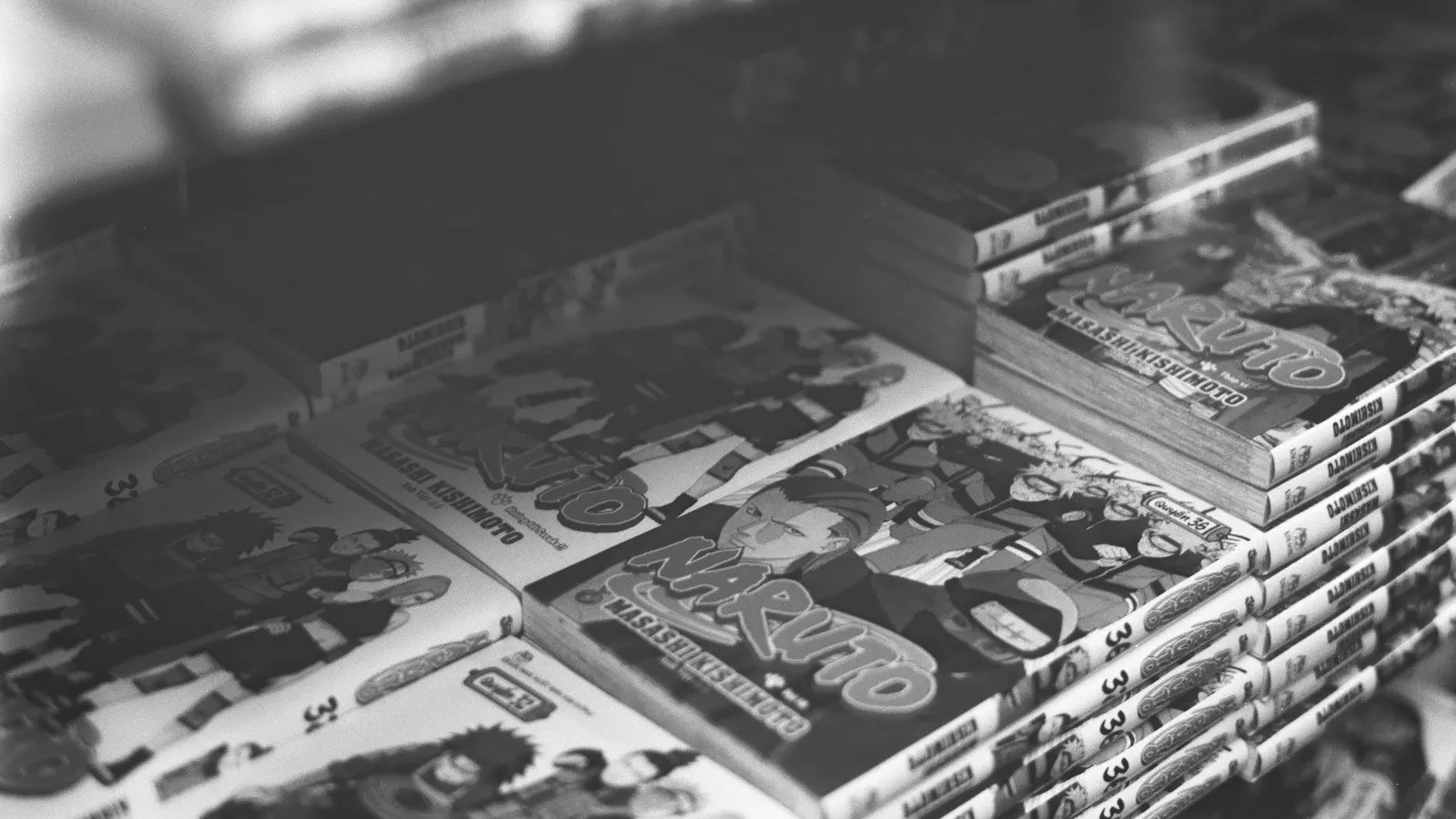
One Piece: the full reading order
GuidesVIZ Media lists 112 One Piece volumes in English, with volume 113 on pre-order. Where to start, single volumes or omnibus, and what the series costs.
One Piece is read in volume order, from the first to the latest, and no other order exists. Eiichirō Oda’s series runs to 112 volumes available in English from VIZ Media, with volume 113 on pre-order, and it is still being published in Japan.
What order should you read One Piece in?
Publication order, starting at volume 1. One Piece is a single continuous story with no reboots, no standalone arcs and no alternative versions. The ordering question, which is a fair one for other series, has exactly one answer here.
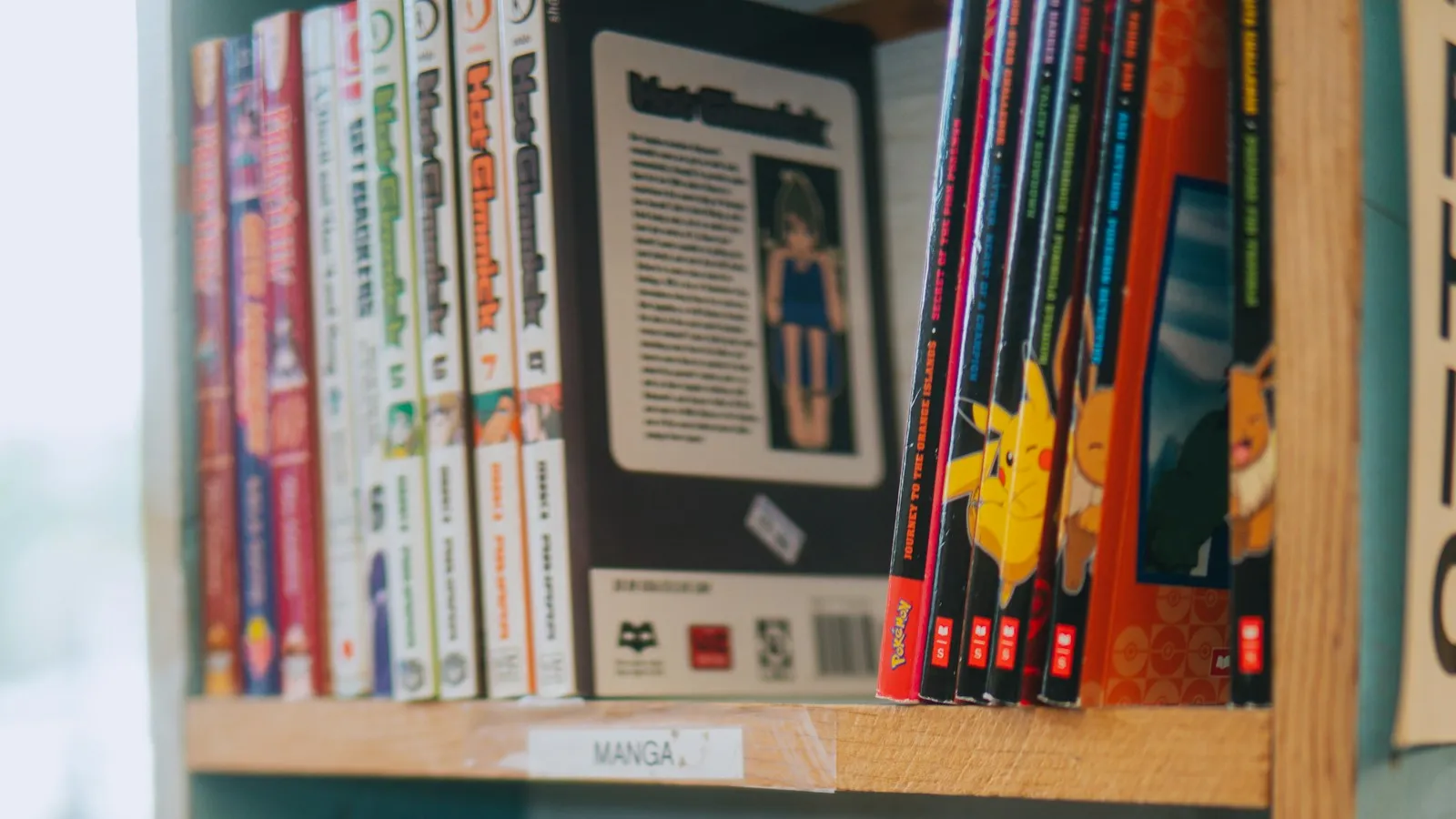
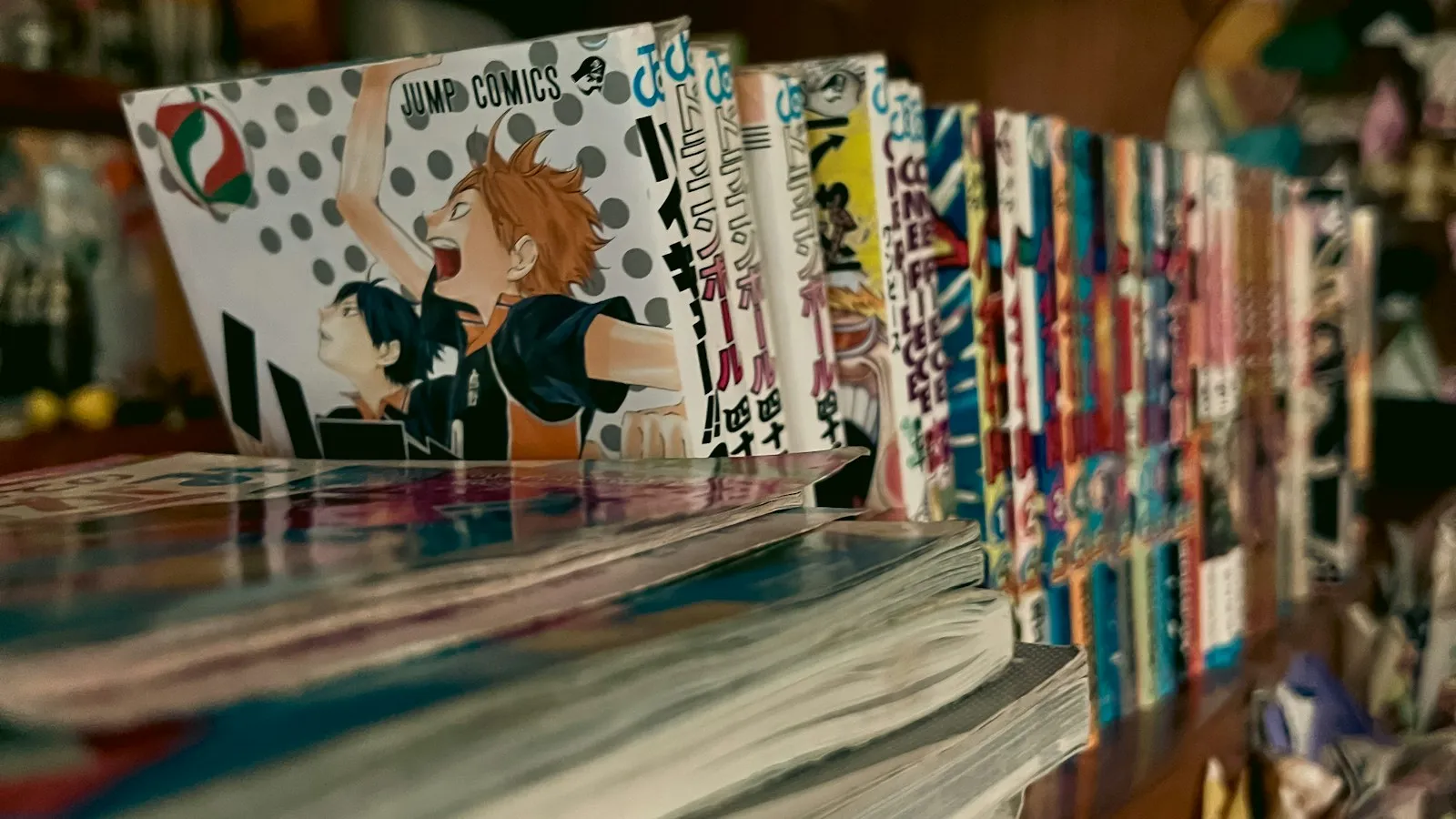
Photo: Collin Wigger / Unsplash.
That simplicity is rare and worth pointing out. Plenty of long series have splintered into prequels, spin-offs and reissues that renumber everything. One Piece has kept one numbering since 1997, and a reader holding the volumes in order holds the whole story.
The only real decision lies elsewhere: format, budget, and the pace you set yourself. That is what the rest of this guide covers.
Why does the question come up anyway?
Because the series is long, because its anime adaptation has taken liberties with pacing, and because search engines return contradictory answers written by sites that checked neither the volume count nor the dates.
Three confusions recur, and each has an explanation.
The first comes from the anime, which contains filler episodes that do not exist in the manga. A reader who hears about a “watch order” concludes that an equivalent reading order must exist. It does not: filler is an adaptation problem, not a story one.
The second comes from the films and spin-offs, which are numerous and carry standalone titles. Their existence suggests a chronology to piece together. They in fact sit alongside the main story and change nothing in it.
The third comes from editions, and in English this one is real. VIZ publishes both single volumes and omnibus editions collecting three volumes each, which means two different numbering systems for the same story.
Single volumes or the omnibus edition?
Both exist in English, and the choice matters more than in most markets. The omnibus collects three Japanese volumes in one book of 608 pages for 16.99 dollars, which works out to about 5.66 dollars per volume. VIZ lists 36 omnibus editions, covering the first 108 volumes.
| Format | What it covers | Price | Best for |
|---|---|---|---|
| Omnibus 3-in-1 | Three volumes per book, first 108 | 16.99 dollars | Catching up from the start |
| Single volume | One volume per book, up to 113 | not listed on the catalogue page | Following current releases |
The trade-off is straightforward. The omnibus is cheaper per volume and takes up less shelf space, but it stops short of the newest releases. Single volumes are the only way to read what has just come out.
Most readers end up combining the two without having planned it: omnibus editions to get through the back catalogue, single volumes to keep up. The drawback is obvious, two different formats on the same shelf, and it is better known in advance than discovered later.
There is a second, quieter drawback to the omnibus worth knowing about. Collecting three volumes into 608 pages produces a thick, heavy book, and the inner margin swallows part of the artwork on double-page spreads. For a series that uses full spreads as often as this one, that is a real cost, and it is the argument long-standing readers give for sticking to single volumes despite the price.
One note on pricing. VIZ’s catalogue page does not display a price for single volumes, so we are not quoting one. We would rather say the figure is unavailable than repeat a number we have not verified.
Where is the series now?
112 volumes are available in English, with volume 113 on pre-order as of 21 September 2026. The series is still being published in Japan, which means it has no known ending.
That is worth taking in before starting, because it changes the nature of the commitment. Starting One Piece today is not reading a finished story at your own pace: it is catching up with a running series, then waiting like everybody else.
This sets One Piece apart from most series recommended to new readers. A finished series can be read through, shelved and revisited. A running series asks you to come back regularly, sometimes for years.
It also means any volume count, including the one in this guide, has a shelf life. We give the figure as of the date at the top of this article, with the publisher as the source, precisely so it can be checked rather than trusted. Any guide quoting a volume count without a date is quoting a number that was true once.
There is an upside to joining a series in progress, and it rarely gets mentioned. A reader working through 112 volumes reads in one go what everyone else waited years for, without the interruptions or the publication breaks. The frustration of waiting only starts once you have caught up, and then it is shared.
What does the full collection cost?
Roughly 612 dollars for the first 108 volumes bought as 36 omnibus editions at 16.99 dollars each. The remaining volumes are only available individually, and we cannot price them because the publisher’s catalogue page does not list single-volume prices.

Photo: olivia kim / Unsplash.
The figure tends to surprise people, and it deserves perspective rather than shock value. Nobody buys a hundred books at once. Spread across the twenty-nine years the series has been running, the same amount comes to about twenty dollars a year, the order of magnitude of a couple of months of a streaming subscription.
Three ways to bring the cost down exist, and none of them is shameful.
Second-hand first. A series this widely distributed turns up in quantity on the used market, often in lots matching a whole arc, and sometimes as a complete run from a reader who gave up partway. It is the cheapest route by a wide margin, and it deprives the author of nothing they were not already paid for on the first sale.
Libraries next. Manga is among the most borrowed material in public library systems, and One Piece is stocked almost everywhere. Reading the first twenty volumes before deciding whether to buy is a reasonable strategy.
Many library systems also lend digitally, which removes the waiting list problem that a series this popular tends to create. The catalogue varies by service, and the back volumes are usually easier to borrow than the recent ones, for the same reason they are easier to find second-hand.
Digital last, through the platforms holding the rights. The cost per volume is lower than print, at the price of an ownership that is not quite one.
Worth weighing before committing to digital: a licence can be withdrawn, a platform can close, and a library bought over several years can become unreadable without anything being refunded. It has happened to readers of other catalogues. Print has no such failure mode, which is part of what the higher price buys.
Manga or anime first?
Whichever suits you, given that both tell the same story in the same order. The manga moves faster and contains no filler. The anime brings colour, music and voices, at the cost of a markedly slower pace.
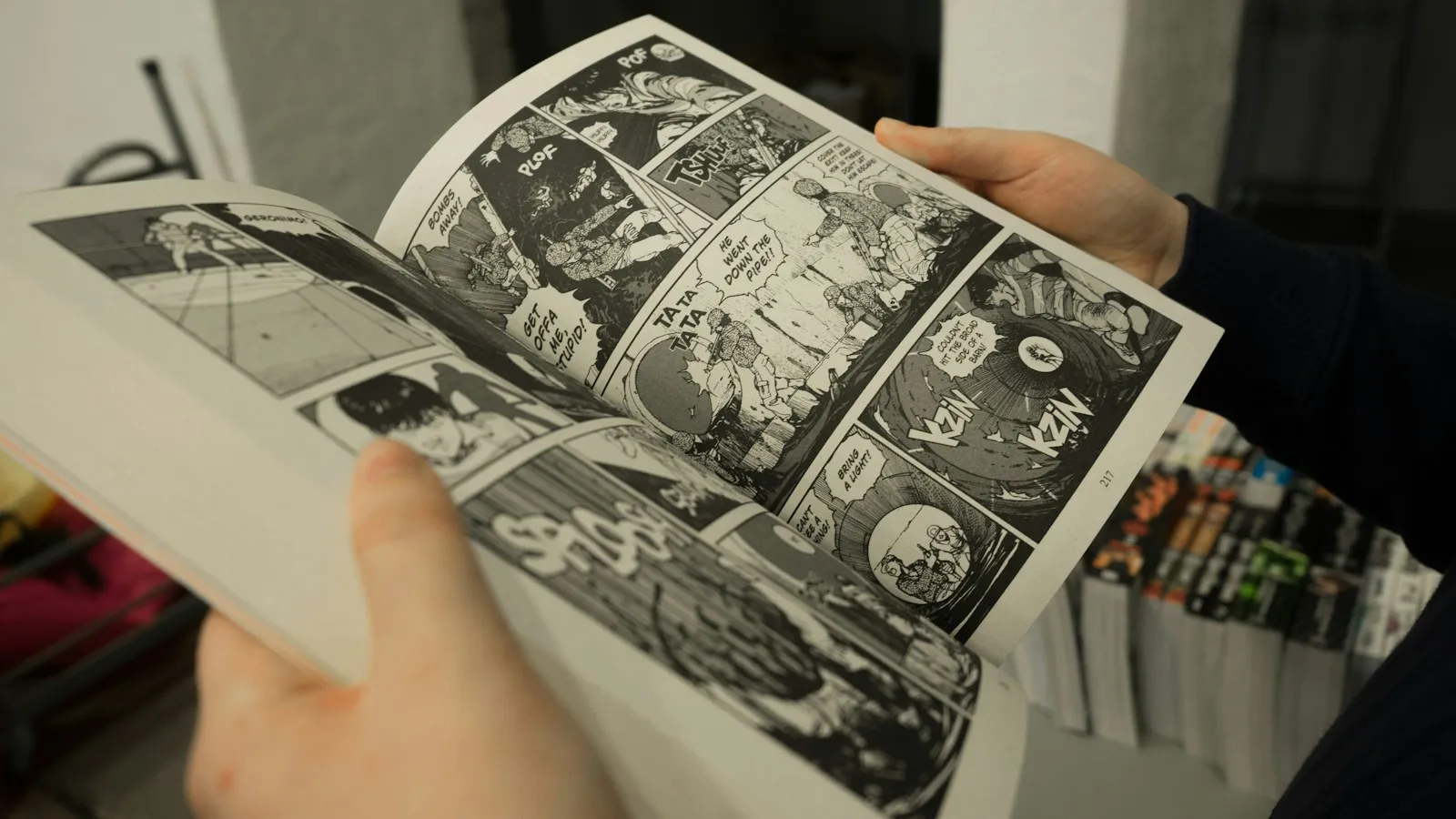
Photo: Miika Laaksonen / Unsplash.
The pacing gap is the decisive figure, and it is structural. A weekly episode adapts on average less than one chapter, while a volume holds around ten. Following the anime therefore means moving several times slower than the manga, which is why one runs so far behind the other.
Filler follows directly from that gap. When the adaptation catches up with publication it has to slow down, and it does so by inserting episodes that do not exist in the manga. That is not a quality failing, it is a production constraint.
Our recommendation for a new reader: the manga if the aim is to catch up, the anime if the aim is to explore the world without rushing. The two combine well, and nothing stops you switching partway.
Are the early volumes representative?
Not entirely, and most guides skip this. The artwork in the early volumes differs noticeably from today’s, and the story takes around twenty volumes to unfold the ambition it is known for.
That gap is normal for a series begun in 1997 and still running. An author drawing for nearly thirty years does not draw the same way at the start and at the end, and the early chapters carry the conventions of their era.
The practical consequence is simple, and it explains a lot of abandoned attempts. A reader who stops at volume 3 concluding it is not for them is judging a series on a tenth of its surface, and on its least characteristic part.
The advice we give comes down to a number: give the series the East Blue arc, roughly the first twelve volumes, before deciding. If nothing has landed by then, what follows probably will not change your mind, and there is no shame in moving on.
That twelve-volume threshold is not arbitrary. It is the length of a complete short series, so a measurable commitment, and it is the point where the story leaves its opening setting for the one it will keep. Judging earlier means judging an introduction; judging later means judging the series.
Is One Piece a good first manga?
For many readers yes, and for bad reasons as much as good ones. It is the best-selling series in the world, the one everybody talks about, and the default recommendation. Its length nonetheless makes it a questionable first choice.
The arguments in its favour are real. The world is immediately legible, the characters are clearly drawn, and the humour requires no prior knowledge of Japanese culture. Someone who has never opened a manga follows what is happening from the first pages, which is not true of every celebrated series.
The argument against fits in one number, the one already given: 112 volumes. Discovering a format by committing to a series of that scale risks confusing two separate questions. Not enjoying One Piece says nothing about what you think of manga, and many readers draw that conclusion anyway.
There is a third route, which we recommend more readily. Read a short finished series first, ten or fifteen volumes, to get a feel for the format, the reading direction and the rhythm. Then come back to One Piece knowing what you like. Little time is lost and the decision is far better informed.
Should you buy volumes as they release?
No, and this is probably the most useful advice in this guide. Buying in batches of ten to fifteen volumes, following the arcs, costs less in shipping, avoids stock gaps and lets you stop without half a shelf already bought.
Buying one at a time has a flaw you discover too late: it turns reading into a subscription. At single-volume prices the spend goes unnoticed, and the total passes several hundred dollars without any conscious decision having been made.
Batch buying imposes a pause instead, and that pause is valuable. At the end of an arc you know whether you want to continue. It is the right moment to decide, and it is a moment that one-at-a-time buying never offers.
One exception is worth flagging. For volumes that have just come out, waiting carries a different risk: print runs on current volumes are set tight, and a temporary gap can last weeks. A reader who has caught up and is following the release schedule does well to buy on release.
For the rest of the catalogue there is no rush. A series selling at this scale is reprinted constantly, and older volumes are everywhere, second-hand included. Our release calendars list the dates each month, which makes planning purchases straightforward.
Do you need the spin-offs and films?
No, none of them is necessary. They sit outside the main story and add nothing essential to understanding it. They are read or watched afterwards, for pleasure, and never to fill a gap.
This rule holds across all derivative productions, and it follows from how they are made. A film has to be comprehensible to a viewer who does not follow the series, so it cannot depend on it. A spin-off has to work in isolation, so it cannot change anything.
The only real risk concerns chronology: some films are set at a specific point in the story and show characters or abilities the manga has not yet introduced. Watching them too early can therefore give things away.
The safe rule fits in one sentence: watch a derivative film once you have passed the point in the story where it sits, never before. Our guide to reading an announcement explains how to check this kind of detail.
How long does catching up take?
About four months at one volume a day, a little over two years at one a week. And three or four new volumes will have come out in the meantime, which has to be added to the calculation.

Photo: Ras Jayamaha / Unsplash.
The table below gives the orders of magnitude, calculated on the 112 volumes available.
| Reading pace | Time to catch up | Volumes released meanwhile |
|---|---|---|
| One volume a day | about 4 months | 1 |
| Three volumes a week | about 9 months | 3 |
| One volume a week | about 2 years 2 months | 7 |
| One volume a month | over 9 years | 31 |
The last row deserves a pause. At one volume a month the reader never catches up: the series advances almost as fast as they do. That is a mathematical property of very long series, and it catches out people who come to manga through One Piece.
Which does not mean you should rush. Reading fast to catch up turns a pleasure into a chore, and the point of a series this long is not reaching the end. The right question is not “how long”, but “at what pace does this stay enjoyable”.
Where can you read One Piece legally?
From a bookshop, a library, or the digital platforms holding the rights. All three pay the author and publisher, and they give you a proofread translation and image quality nothing else matches.
Photo: Kyle Hinkson / Unsplash.
We do not relay scans or chapters circulated ahead of official publication, and this guide is no exception. That is not a moral lecture aimed at readers: it is an editorial line, set out in our editorial policy, and it applies to everything we publish.
There is a practical argument too, rarely made. An unofficial translation is done in a hurry, without proofing, often from another translation. Mistranslations are common, and a reader discovering a series through that channel is reading a text that is not the author’s.
For an English-language reader, the VIZ edition is the reference: it sets the numbering, the names and the terminology everyone else then uses.
What if you fall off partway?
Stop, and pick it up later at the same point. A series this long imposes no pace, and setting it aside is not a failure. The volume is still there, and the numbering means you resume exactly where you left off.
Falling off almost always has the same cause: an arc longer or slower than the others, hit during a period with less time available. Past that stretch, the momentum usually returns by itself.
One method works well and asks little: note the number of the last volume read and one sentence about what was happening. Picking a series back up after six months with no idea where you were is the most common reason an abandonment becomes permanent.
Then there is the reader who simply does not connect with it, which is entirely legitimate. One Piece is very long, very talkative, and its humour does not suit everyone. It is neither a rite of passage nor an entrance exam for manga.
If that is you, the useful move is to work out what specifically did not land. Pacing, humour, artwork and length are four separate objections, and each points towards a different series. A reader who found it too long will be fine with a finished ten-volume run; one who disliked the humour needs a different register entirely.
What to take away
One Piece is read in volume order, from the first to the latest, and no other order exists. VIZ Media lists 112 volumes in English as of 21 September 2026, with volume 113 on pre-order, and the series is still running in Japan.
Two formats coexist in English: the omnibus, collecting three volumes for 16.99 dollars and covering the first 108 across 36 books, and single volumes, the only way to read the newest releases. Buying the back catalogue as omnibus editions comes to roughly 612 dollars.
Films and spin-offs are not required and can give away what is coming. The anime tells the same story more slowly, with filler that the pacing gap with the manga makes inevitable.
Finally, give the series a dozen volumes before deciding: the early volumes resemble neither the artwork nor the storytelling it will grow into.
One closing note, true beyond this series. A reading guide does not replace a personal decision: it supplies the figures, the formats and the pitfalls, and stops there. Starting a 112-volume series commits several hundred hours and several hundred dollars, and that is a choice made with the facts in hand, not on a website’s say-so.
Comments
Sign in to comment.
A sign-in link is sent to your inbox. Your address must be verified before you can post.