
How to Read a Manga Announcement
GuidesA manga or anime announcement is worth exactly what its source is worth. Here is how to tell settled news from unsettled news in thirty seconds.
A manga announcement is worth exactly what its source is worth. Three questions settle it: who said it, is there a link to the original, and does the headline promise more than the text. This guide explains how to answer each in seconds, using real examples.
What are the three levels of reliability?
Every piece of news sits at one of three levels, and the level reached decides how it gets written.
| Level | Source | How it is written |
|---|---|---|
| Confirmed | the publisher, magazine, author, studio | present tense, no hedging |
| Reported | a named outlet, no primary source | “according to”, outlet named |
| Rumour | no official source | conditional, flagged, updated |
The trap is not lying, which is rare. It is drift: a reported item that, copy after copy, ends up written as confirmed.
Where do announcements start, and what do they pass through?
Almost everything begins in the same place: the Japanese publisher, or the committee holding the rights to an adaptation. What varies is the distance travelled before it reaches your screen.
Photo: Les Taylor / Unsplash.
The typical chain has four links, and the information degrades at each one.
| Link | What it adds | What it can damage |
|---|---|---|
| Primary source | The fact, dated and complete | Nothing, but often in Japanese |
| Specialist press | Translation, context | A nuance, a date |
| Aggregators | Rapid distribution | The source, the date, the caveat |
| Social media | Reach | Everything else |
The fourth link is where most readers meet the information, and the only one where nothing guarantees its origin any more. A post claiming a series is getting an anime adaptation may be relaying an official statement or a wish an anonymous account expressed three days earlier.
One notable exception: announcements made by streaming platforms, which address foreign audiences directly. They bypass the first three links, and their announcements are both primary and in your language. It is the one situation where a social media post can count as a source.
It is worth saying that no link is acting in bad faith. An aggregator that loses the source is not lying, it is hurrying; an amateur translator conflating two verbs is deceiving nobody. The degradation is mechanical, which is exactly why tracing it back works.
Walking back up the chain rarely takes more than a minute, and that is all the method described here asks.
Why do so many announcements turn out false?
Because audience anticipation creates a market for what does not yet exist.
A popular series whose adaptation has been hoped for over years guarantees an audience to anyone claiming it is coming. The announcement does not need to be true to work: it only needs to be wanted. And since nobody returns to correct a story three weeks later, the cost of being wrong is nil for whoever spreads it.
A difficulty particular to this field compounds it. Much information circulates first in Japanese, translated by well-meaning amateurs, and one nuance lost in translation turns an intention into a schedule. The Japanese verb meaning “to consider” and the one meaning “to decide” are not confused in the original text, but the summaries derived from it confuse them regularly.
Finally, some announcements are true but incomplete, which produces the same effect. An adaptation confirmed without a date, a studio or a platform is not an imminent release: it is a project that exists, with no guarantee it will arrive on the timeline everyone imagines.
These three levels are not a hierarchy of quality but of certainty. A rumour can turn out accurate, a confirmed item can be cancelled: what the classification tells you is what you know as you read, not what will end up happening.
We flag that level in every article, and we revise it as things move. Information reported on Monday that becomes official on Thursday is updated, with the date of the change.
How do you check an announcement in thirty seconds?
Three questions, in this order.
Who said it? Look for a name: a publisher, a magazine, a studio. Not “sources”, not “it is said”. If the article does not give one, it probably does not have one.
Is there a link to the original? An outlet that has verified shows its work. An article citing only other articles is a link in a chain whose first ring nobody checks.
Does the headline promise more than the text? When the headline asserts and the body says “could” or “has not been confirmed”, the news is a rumour dressed as an announcement.
What is a serialisation magazine, and why does it matter?
The outlet in which a manga appears chapter by chapter before being collected in volumes, and the most reliable source there is for an announcement.

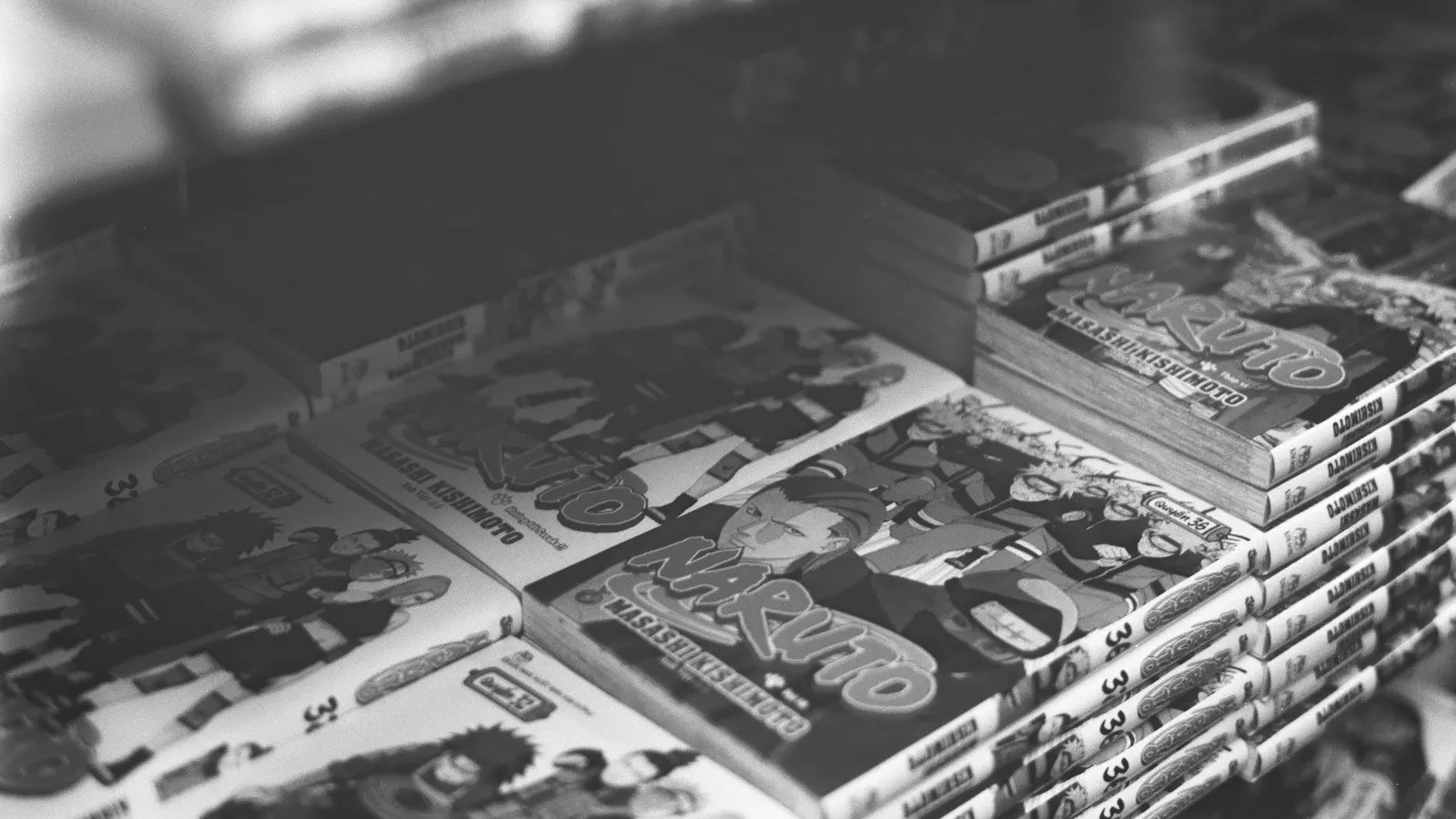
Photo: Connor Gan / Unsplash.
In Japan, a series lives first in a weekly, fortnightly or monthly magazine, alongside twenty or so other titles. It is that magazine which announces new series, endings, hiatuses and adaptations, generally in its issue of the week, ahead of any press release.
That has a practical consequence. The most reliable information often circulates first as photographs of magazine pages, taken by Japanese readers on publication day. They are accurate, but they are not official in the strict sense, and the publisher will sometimes only confirm them several days later.
Photographing and circulating those pages is itself a grey area, since the issue is on sale and the images are not the publisher’s to give away. We describe the practice because it shapes how information reaches you, not because we endorse it.
An attentive reader therefore distinguishes three things: what the magazine printed, what the publisher announced, and what an account claims to have read. The first two can be checked; the third cannot.
Advance dating is not a Japanese peculiarity: European magazines have always done the same. What differs here is that the cover date circulates as though it were the announcement date, and nobody corrects it.
Which is also why dates matter so much. A magazine dated the 15th often goes on sale on the 1st, the cover date being the date it is pulled from sale rather than the date it appears. An announcement attributed to the wrong issue shifts every calculation you derive from it.
These magazines’ schedules are public and regular, which allows you to anticipate. A weekly appears the same day each week, a monthly around a fixed date. When a rumour promises a reveal on a date matching no publication, that is a first clue.
What does this look like on real cases?
Take two items from 8 September 2026.
The Junket Bank anime delay comes from the series’ official website, citing a need for additional production time. The original date was 5 October on TV Tokyo; no new date is given. That is confirmed: primary source, complete information, including about what is not yet known.
Toshio Suzuki’s remarks on AI, which we covered in our article on Ghibli, are different. The outlet is named, the Asahi Shimbun, and the speaker is named. But this is not a studio statement: it is a man speaking for himself. So the words are attributed to Suzuki, not to Ghibli.
The distinction looks slight. It decides the headline.
That verification applies to what we publish too. Each of our articles lists its sources at the foot, with direct links: you can trace the origin of everything we write, and we correct publicly when we get something wrong.
What are the most common traps?
Cascade translation. A Japanese item passes through one English-language outlet, then another. At each step a qualifier drops: “under consideration” becomes “planned”, “being explored” becomes “announced”.
The date that does not exist. A release window is not a date. “Spring 2027” is an intention. Until the publisher gives a specific day, nothing is locked. The same holds for foreign editions: a fortnightly digital serial like Glitch Witch cannot produce an English announcement for several months, whatever you read.
The visual as proof. A polished image proves nothing: images are made. The finish of an announcement says nothing about whether it is true.
Do announcements made at conventions carry the same weight?
Yes in substance, no in form, and that distinction explains a great deal of confusion.
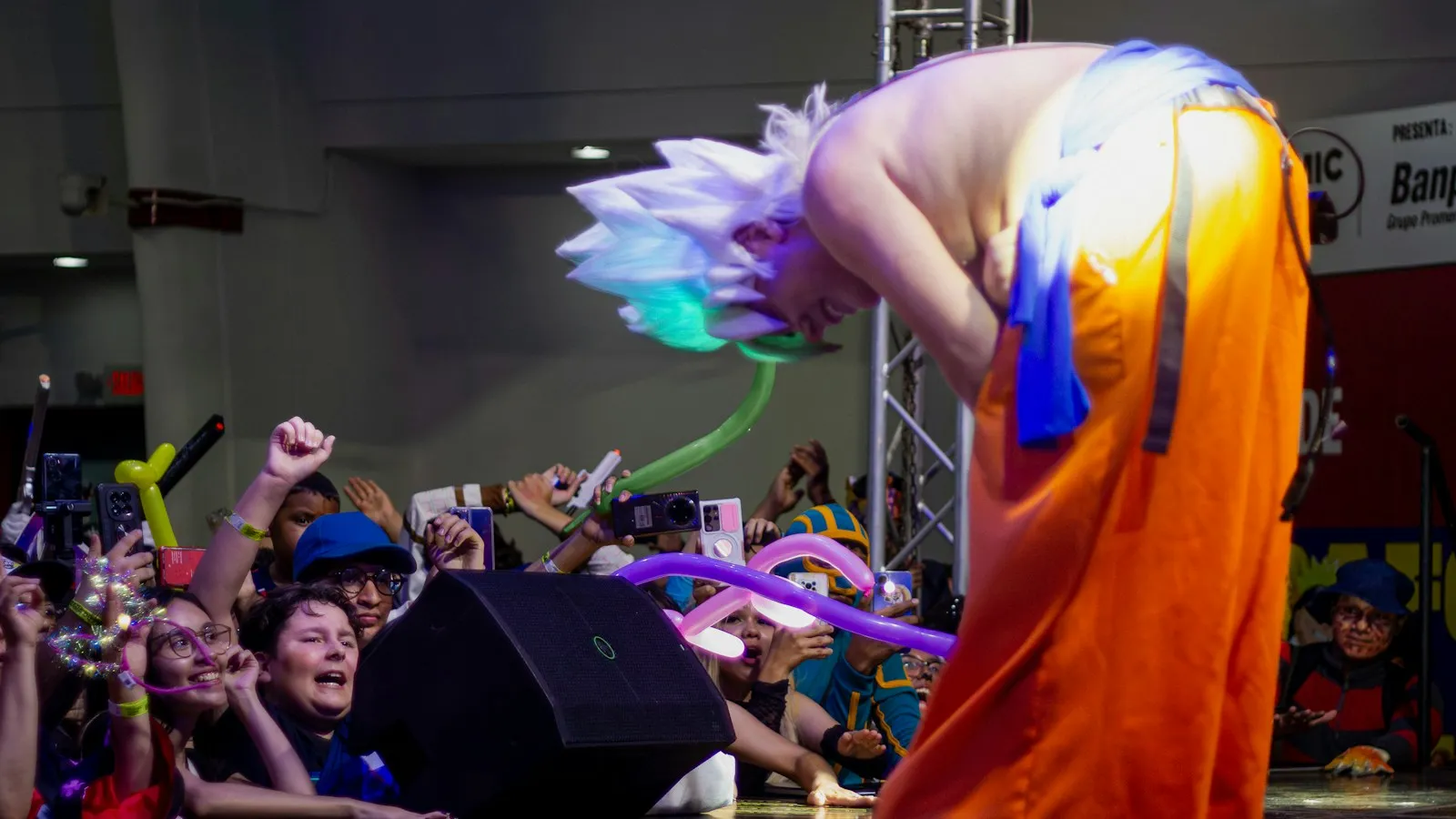
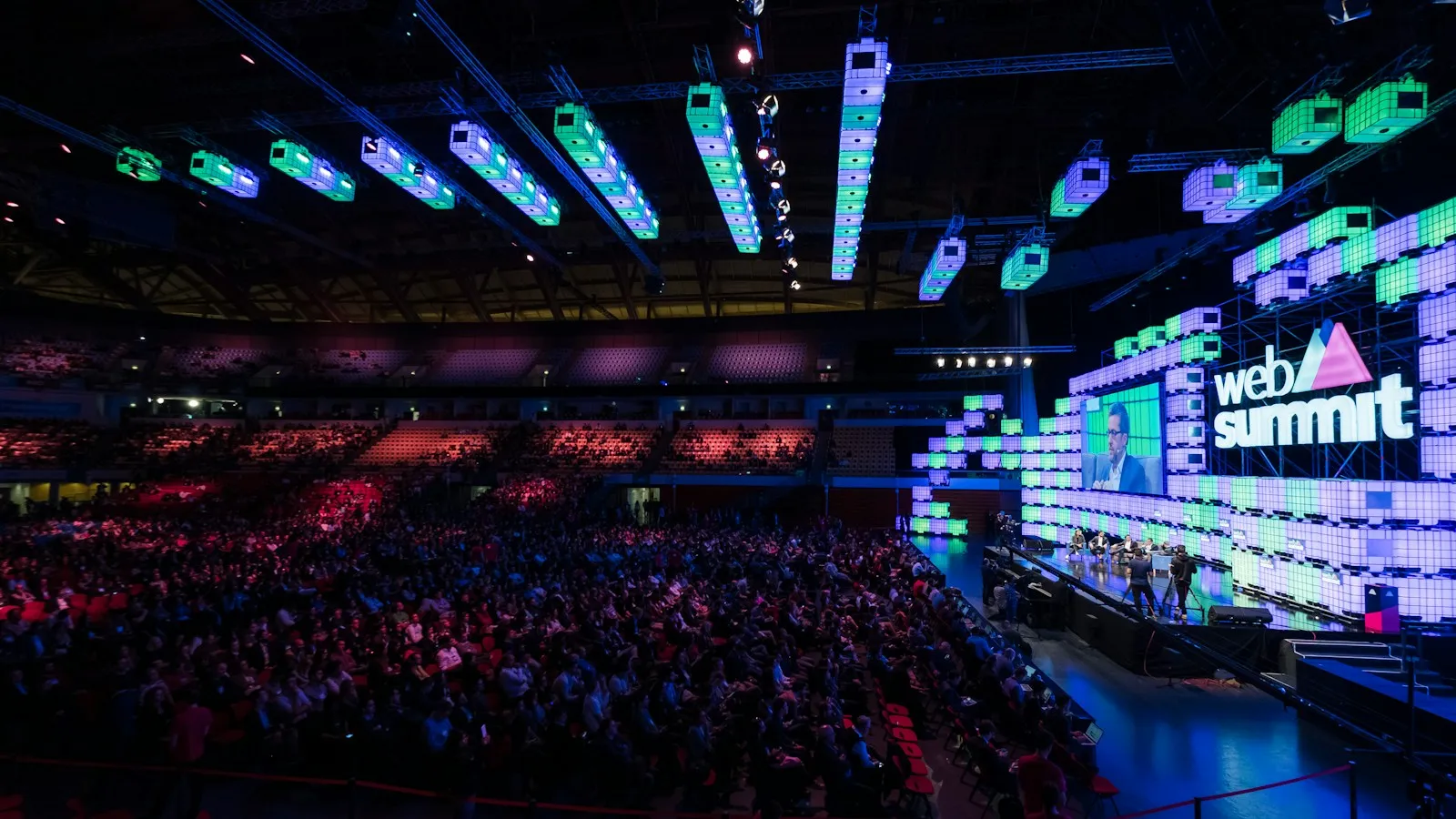
Photo: Les Taylor / Unsplash.
An announcement made on stage in front of an audience is official: it commits whoever makes it. The problem lies in what comes out of it. There is generally neither a press release nor a page to cite in the hour that follows, only attendee accounts, photographs of screens and video filmed from a distance.
None of this makes convention announcements less real. It makes them harder to cite, which is a different problem and one that resolves itself within a day.
Three precautions apply in that case. The first is to wait for the event’s or the licence’s official account, which almost always posts a round-up within hours. The second is to distrust figures and dates relayed from memory by attendees: a date said aloud is poorly retained. The third is to separate the announcement of an intention from the announcement of a schedule. “We are working on it” and “it will be available in March” do not carry the same weight, and round-ups routinely conflate them.
Time zones complicate matters as well. A Japanese convention announcing something on Saturday morning does so in the middle of the European night, and the first versions circulating here at breakfast have already passed through several hands.
One further habit applies across a convention weekend: false announcements are more numerous then, precisely because audience anticipation makes them plausible.
How do you recognise a reliable account?
By what it posts when it has nothing to announce, not by its follower count.
Photo: Adem AY / Unsplash.
A serious account cites its sources constantly, including for minor items. It corrects publicly when it gets something wrong, and those corrections stay visible. It flags when information is reported rather than confirmed, and it does not post announcements without a link to something checkable.
An account to avoid does the reverse, and several signs are reliable: headlines phrased as questions, announcements with no link, a tone promising more than the content delivers, and a complete absence of corrections in a field where everyone gets things wrong sometimes.
| Sign | What it indicates |
|---|---|
| Sources cited as a matter of course | Reliable account |
| Corrections visible and dated | Reliable account |
| Interrogative headline with no answer | Chasing engagement |
| Announcement with no link at all | Check elsewhere |
| Never an error acknowledged | Check elsewhere |
A simple test settles most doubts: look at what the account posted during a week when nothing happened. A serious outlet posts little and cites its sources; an account living on engagement posts as much as ever, recycling old items presented as new.
Follower count says nothing about reliability. Some of the most followed accounts in this field are aggregators reposting without checking, and their reach amplifies errors rather than correcting them.
What do you do when the information exists only in Japanese?
The situation is common, and it resolves more easily than people expect.
Photo: Jakob Owens / Unsplash.
Machine translation is enough to settle the question that matters: is the information on the publisher’s own site, yes or no? You do not need fine comprehension to recognise a series title, a date in Japanese format or a magazine’s name.
Two markers help you read those pages without the language. Japanese dates are written year, month, day, which removes any ambiguity between 3 April and 4 March. And the names of magazines and series usually appear as they are, untranslated, which makes them easy to spot.
Japanese publisher sites also follow stable conventions. The news section almost always carries the same name, press releases are dated at the top, and series pages list published volumes with their dates.
One further resource: Japanese publishers often post an English version of their more significant releases, a few days behind. Searching the series title alongside the publisher’s name in English resolves a good share of cases.
Where doubt persists, the rule is the same as everywhere else: do not pass it on. Information you could not verify does not become true by being plausible, and waiting twenty-four hours costs nobody anything.
These examples have one thing in common: in each case, checking would have taken under a minute, and nobody did it. That is not a question of competence but of habit, and the habit forms quickly once you know where to look.
What do the words in announcements mean?
Some terms come up constantly and do not mean what people assume.
| What is written | What it actually means |
|---|---|
| “In development” | A project exists, nothing is filmed or drawn |
| “Adaptation announced” | The principle is agreed, neither date nor platform is |
| “New series” | May mean a sequel, a spin-off or a reboot |
| “English edition planned” | A contract exists, the date remains movable |
| “The series returns” | Often the end of a hiatus, not something new |
Two formulations deserve particular care. “Teased” denotes nothing checkable: a blurred image posted by an official account can herald a series or a keychain. And “confirmed by” followed by an outlet’s name is worth something only if that outlet cites a primary source itself, which you have to go and check.
Worth adding that these phrasings are translations, and the original Japanese is often more precise than what reaches you. Where a term looks vague, the vagueness may have entered on the way rather than at the source.
The vocabulary of dates asks the same attention. “Sometime in 2027” commits to nothing, “spring” denotes a Japanese broadcast season beginning in April, and “coming soon” means nothing at all.
These formulations are not there to mislead. A publisher writing “in development” is saying exactly how things stand, and it is the intermediate link that turns caution into promise. Reading the original release rather than its summary is usually enough to restore the nuance.
Should you distrust leaks?
Yes, for two reasons that have nothing to do with each other.
The first is factual. Information obtained ahead of official publication has not been verified by whoever is spreading it, and often describes a provisional state: a project can change studio, date or format between the leak and the announcement. A leak accurate when it appears can be false two months later.
Readers wanting to avoid such material have few direct tools, since platforms actively push it in the days before a release. The only effective habit is choosing sources in advance rather than filtering after the fact.
The second is editorial, and it concerns us directly. Chapter leaks come from copies obtained before publication, which is to say from theft. We relay neither those images nor the plot details drawn from them, however accurate, and that rule appears in our editorial line without exception.
One further trap deserves naming, because it catches the most attentive readers: confusing an announcement about Japan with one about your own country. A series streaming in Japan is not necessarily streaming elsewhere, a volume published there does not arrive here the same month, and an edition announced in one language prejudges nothing about another. The question to ask of any announcement is therefore: for which territory?
How long should you wait before sharing?
Twenty-four hours covers almost every case, and the delay costs nothing.
A real announcement does not vanish overnight: it gets picked up, confirmed, filled in. A false one dies within the same interval, for want of a source to produce. Waiting a day therefore lets the sorting happen by itself.
The delay has another merit. The first hours of an announcement are when the roughest versions circulate, because everyone is hurrying. The details that matter, which is to say the platform, the territory and the date, often arrive later, once the publisher has issued its full release.
Only one situation justifies sharing immediately: when you are looking at the primary source yourself. At that point you are no longer relaying information, you are observing it.
The delay does not apply to information you have no intention of sharing. Reading a rumour, taking an interest and waiting to see poses no problem at all: the habit described here concerns sharing, not curiosity.
How do you follow a series without getting caught out?
By choosing your sources once, rather than checking each item as it comes.
Three follows cover the essentials: the official account of the licence you care about, your local publisher’s if one exists, and a specialist outlet that cites sources. That base will bring you the real announcements a few hours late, which makes no practical difference.
Three is also about the limit worth maintaining. Following twenty accounts to stay informed guarantees only that you will see everything, including everything wrong, and sorting it becomes a second job.
The rest is convenience. Automated alerts on a series name return a lot of noise and little information. Discussion groups are useful for reading recommendations, considerably less so for news: they relay what circulates, rarely what has been checked.
| Worth following | Safe to ignore |
|---|---|
| The licence’s official account | Aggregator accounts with no sources |
| Your local publisher, if there is one | Automated keyword alerts |
| A specialist outlet that cites | Screenshots without context |
One last habit saves a great deal of time: when an announcement surprises you, look for it on the publisher’s own site rather than in your feed. If it is there, you have the full version; if it is not, you already know what it is worth.
What this method actually changes
It will not make you miss news: real announcements are picked up everywhere, you will see them regardless. What it saves you is six months of waiting for a season 2 that nobody ever announced.
It is the method MangaWire applies to itself, and it is written into its editorial standards. Every article here carries its sources at the foot of the page, with a direct link. If one is missing, it is missing: tell us.

Comments
Sign in to comment.
A sign-in link is sent to your inbox. Your address must be verified before you can post.