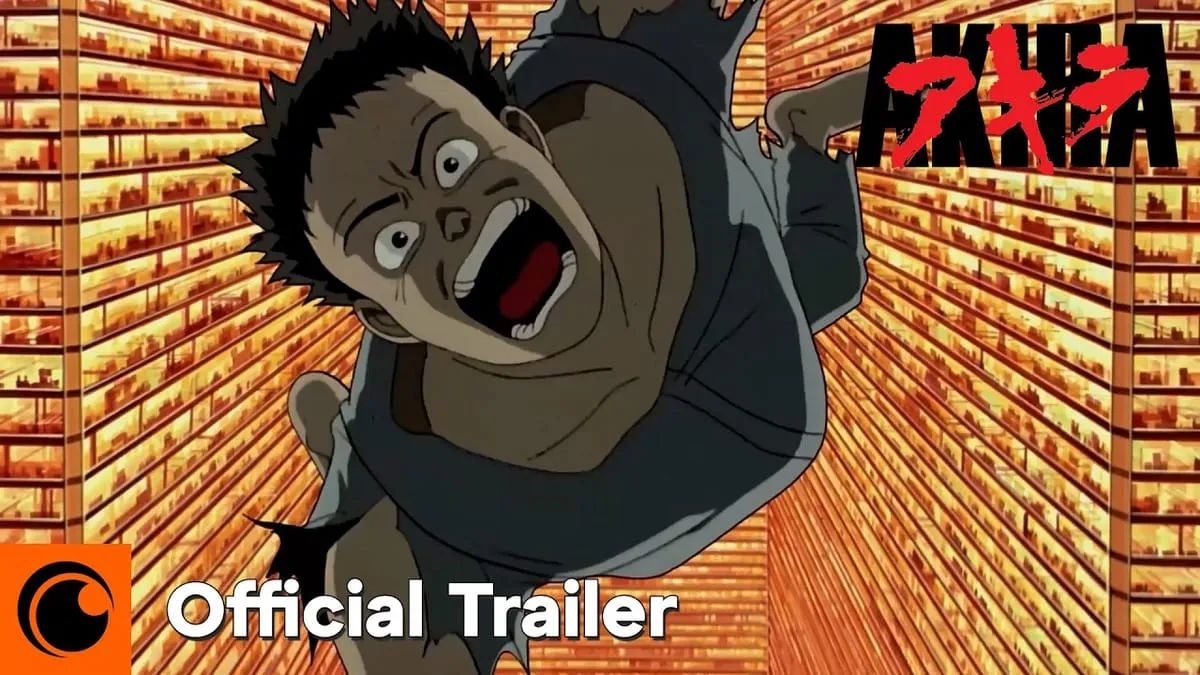
Akira in 4K: 3.17 Million Dollars
IndustryThe 4K and IMAX re-release of Akira took 3.175 million dollars over the Labor Day weekend in the United States and Canada, via Crunchyroll and Sony.
The 4K and IMAX re-release of Akira took 3.175 million dollars over the extended Labor Day weekend in the United States and Canada. Katsuhiro Ōtomo’s film returned to theatres on 4 September 2026, distributed by Crunchyroll and Sony Pictures Entertainment, subtitled and in an English dub.
What did each day take?
The weekend runs to four days, Labor Day being a public holiday in the United States. The split is unusual: the best figure lands on Friday, and the gross then falls without interruption.
| Day | Gross | Share of weekend |
|---|---|---|
| Friday | $1,220,000 | 38% |
| Saturday | $725,000 | 23% |
| Sunday | $695,000 | 22% |
| Monday (holiday) | $535,000 | 17% |
| Total | $3,175,000 |
Figures from Box Office Mojo.
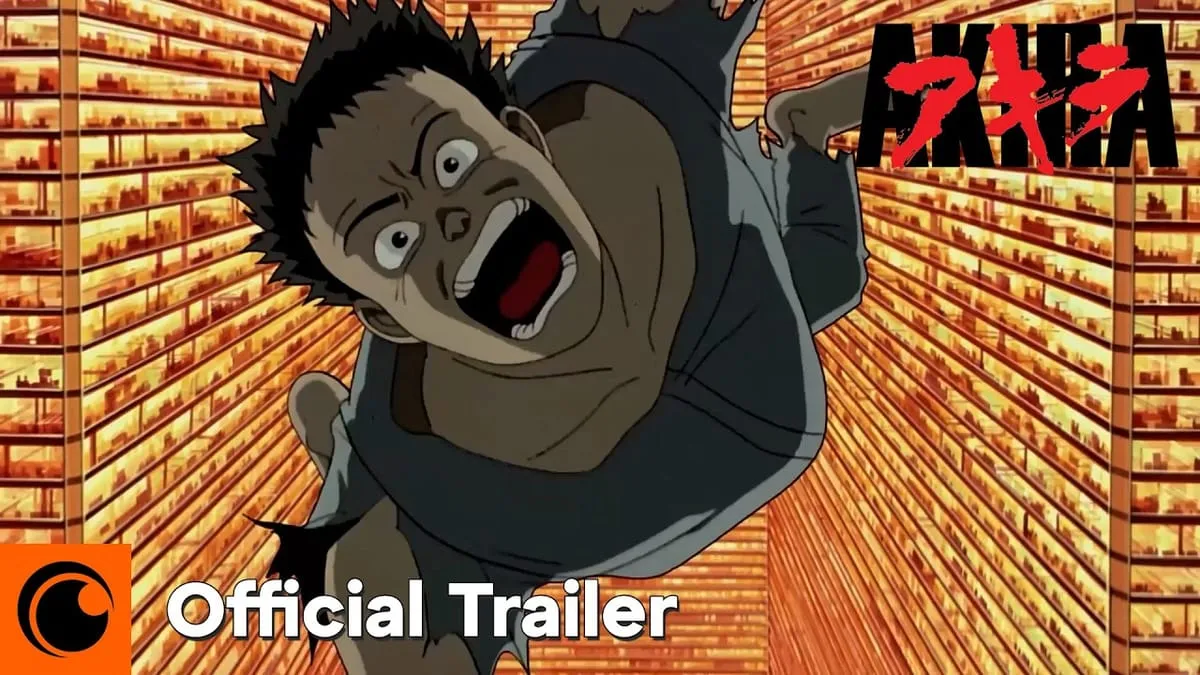
©Katsuhiro Ōtomo/Kodansha, Akira Committee. Trailer: Crunchyroll.
What is Akira, for anyone who has never seen it?
A Japanese animated film from 1988, directed by Katsuhiro Ōtomo from his own manga. It is set in Neo-Tokyo, a city rebuilt after an explosion levelled the capital, and follows two teenagers from a biker gang, one of whom develops powers the military wants back.
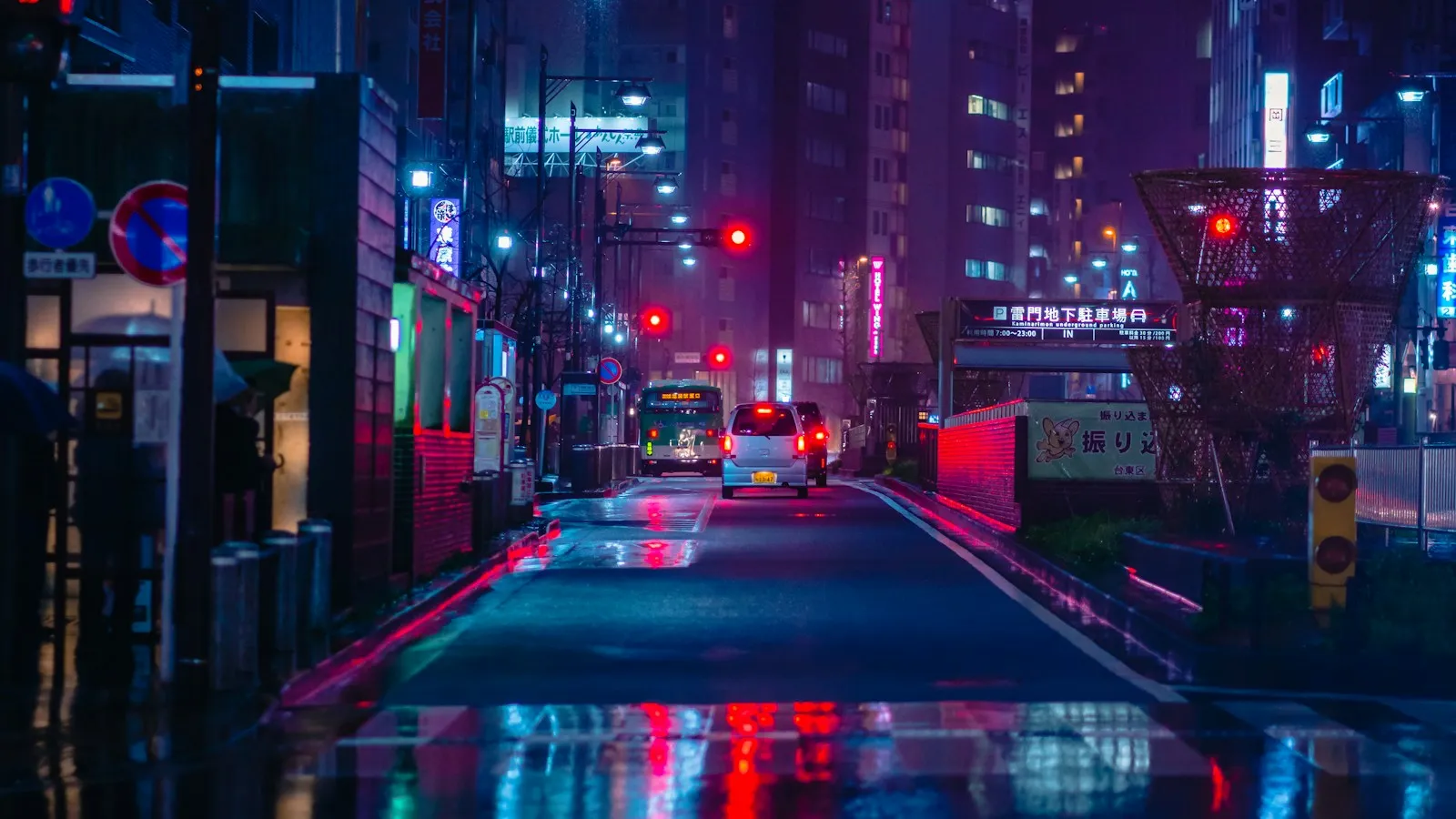
Photo: Valentin BEAUVAIS / Unsplash.
That summary does not explain why the film matters. What landed, in 1988, was the density of its imagery: crowds animated shot by shot where the convention was to freeze them, signs lighting up at the back of frame, a city that goes on existing behind the characters. Japanese animation then economised on movement; Akira spent it.
That density costs, and it shows in the figures: every crowd shot means animating separately characters most productions would have drawn once and repeated. It is the kind of expense nobody registers consciously, and which immediately separates a rich image from a thrifty one.
Worth remembering is that in 1988 everything was drawn by hand, on cels painted one at a time. No computing shortcut existed: each animated element in a shot answered to a sheet somebody had coloured. Which is why this film’s drawing count is still quoted as a benchmark nearly forty years on.
The film also exported an aesthetic. Wet streets under neon, motorbikes trailing light, the vertical megalopolis: those images became a grammar, borrowed for thirty years by cinema, video games and advertising. Anyone discovering the film today stands a good chance of recognising its shapes without ever having seen it.
One detail the reissue makes sharp: the action is set in 2019, in a Neo-Tokyo preparing for the Olympic Games. The film imagined that date as a distant future. It is behind us.
Why does Friday beat Saturday?
Because the audience is not the same. A mainstream release posts its best day on Saturday: people decide the night before, or that morning, based on what is showing.
Here, 38 per cent of the gross falls on the opening night. That is the signature of an audience who knew the date, booked ahead and had no intention of waiting. Nobody discovers Akira by walking past a poster; they set out for it.
The decline that follows confirms it. A new release that connects sees its gross rise on Saturday, carried by word of mouth from the night before. Nothing of the sort here: each day takes less than the last, down to the public holiday that ought to be a strong day. The available audience turned up at once, and then the room emptied.
This profile is no failure; it matches what exhibitors expect from a reissue. A re-release is not trying to last six weeks: it takes what is there, over a short window, with prints moving on to other cities afterwards. Which is why such operations are programmed over a long weekend rather than an ordinary one.
Is that a good figure for a re-release?
It needs reading with care. The IMAX format inflates the gross mechanically, since tickets cost considerably more: actual attendance is therefore lower than the sum suggests.
Neither the theatre count nor the overall box-office ranking has been disclosed, which makes it impossible to work out the per-screen average, the number that actually tells you whether a room was full.
That absence is worth flagging rather than working around. Without it, nobody can say whether the film half-filled three hundred screens or packed out a hundred and fifty, and those two situations tell opposite stories. Distributors release a figure readily, and rather less readily whatever would let you put it in proportion.
What can be said fits in a sentence: for a re-release of a 1988 film, with no mainstream campaign, over four days, three million dollars is a good result. Comparing it to a new release would be meaningless, since neither the costs nor the objectives are the same.
What did the film cost at the time?
Seven hundred million yen, roughly 5.5 million dollars of the day. It was then the largest budget ever committed to a Japanese animated film.
No single studio carried it. Seven companies formed a committee to finance and promote the picture.
| Company | Business |
|---|---|
| Kodansha | publisher of the source manga |
| Toho | theatrical distribution |
| Bandai | toys and merchandise |
| Mainichi Broadcasting System | television |
| Hakuhodo | advertising |
| Laserdisc Corporation | home video |
| Sumitomo Corporation | financing |
The list is instructive. Each committee member represents a channel of exploitation, and each recoups by a different route: the cinema, the tape, the toy, the broadcast. The film did not have to break even in theatres alone, which explains how a record budget could be committed to so uncommercial a project.
Converted at today’s values, the sum looks modest beside what a feature animation costs now. The comparison misleads, though: what was expensive in 1988 was labour, counted in drawings and in months, and that is precisely the expense the industry has spent forty years trying to reduce.
That structure is no exception. It became the norm in Japanese animation, under the name production committee, and it still finances most series airing today. When an announcement names a committee rather than a studio, this is the structure it means: a company created for one title, whose members divide the rights by territory and by format.
Set against that original budget, the 3.175 million dollars taken over the Labor Day weekend reads differently. A single theatrical reissue, in one country, thirty-eight years later, earns more than half what the film cost to make.
Where have we already seen Akira without knowing it?
In two works almost everyone has seen, whose makers have acknowledged the debt.
The Matrix, first. The Wachowski sisters and Keanu Reeves have named the film among their influences, and John Gaeta, who led the visual effects, explained drawing on Akira’s fluidity for the action sequences. The film’s best-known effect, that suspended time around a moving figure, owes something to this way of making an instant last rather than dispatching it.
Stranger Things, second. The Duffer brothers have said they leaned on Japanese animation, Akira foremost, and the resemblance surfaces without looking for it. Two teenagers acquire psychokinetic powers through state experimentation. Both escape detention in a torn hospital gown. The likeness is not one isolated shot but the whole architecture of the character.
The influence runs further than these two cases, and it is easier to list what escaped it. A generation of designers working on dystopian cities learned their vocabulary here, often at second hand, through works that had themselves borrowed from it.
That kinship explains part of the reissue’s success. A thirty-year-old viewer has not necessarily seen Akira, but has seen what it produced, and the screening offers a trip back to the source. It is a rare commercial argument: the film needs no explaining, only placing.
It also explains why it ages well. What has been copied for thirty years ends up looking familiar, including in the hands of whoever invented it first.
What does a 4K restoration actually change?
It starts from the original negative, not the video master. The film is scanned frame by frame at high resolution, then cleaned of the scratches and dust accumulated on the stock. Colour is regraded, in principle under the supervision of a rights holder who knows the original intent.
That last point separates a good restoration from a bad one. An over-zealous restoration smooths the photochemical grain, erases deliberate imperfections and gives a 1988 film the flat look of a digital image. Akira is a particular case: its traditional animation rests on thousands of hand-painted cels, and the grain is part of the material.
For readers, the practical interest lies elsewhere: a 4K restoration approved by the rights holders almost always ends up as a home release. A theatrical re-release frequently doubles as the launch campaign for a disc arriving within months.
Does the manga tell the same story?
No, and the gap is wider than people assume.
Ōtomo published Akira in Kodansha’s Young Magazine from 20 December 1982 to 25 June 1990. Six volumes, more than two thousand pages. The film, meanwhile, arrives in 1988: two years before publication ended. Its author therefore adapted a story he had not finished, and wrote it a different ending for the occasion.
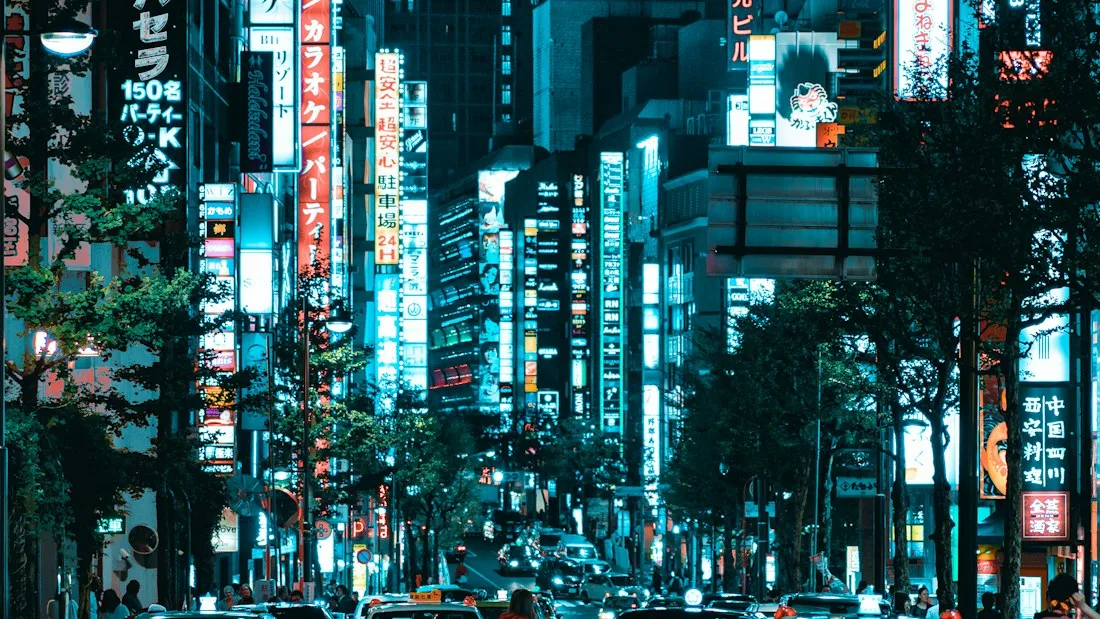
Photo: Derch / Unsplash.
The consequence is stark. The film compresses into two hours a story that needed far longer, and sacrifices whole tracts: secondary characters vanish, conflicts resolve in a scene, and the manga’s second half simply does not exist on screen. Anyone finding the ending abrupt is not mistaken: it is, because it was built to close what remained open.
The order of discovery therefore matters, which is not always the case.
| If you start with | What you gain | What you lose |
|---|---|---|
| The film | The animation, the visual shock, two hours | Three-quarters of the plot |
| The manga | The complete story, developed characters | Time: six dense volumes |
One practical note for English-language readers: the manga has been published in several editions over the years, with differing formats and translations. Anyone buying should check which edition they are ordering, since the volume count varies between them.
There is no right answer, only a caution: do not rely on the film to know what the manga is about. It is the same care worth taking with an adaptation announcement, where the word “adaptation” covers faithful transposition and complete rewrite alike.
Why has there never been a live-action film?
Because the project spent twenty-three years in development without shooting a frame.
Photo: Jason Dent / Unsplash.
Warner Bros. held the adaptation rights from 2002. Several teams passed through, several release dates were announced and abandoned. The last attempt attached Taika Waititi to direct, with a release envisaged for 2021; the director’s commitments elsewhere pushed it back year after year.
The Hollywood Reporter reported in June 2025 that Warner Bros. had declined to renew those rights, which reverted to Kodansha. Neither party has issued a statement about the transfer, and we present the information as reported rather than confirmed.
If it holds, the consequence is simple: the adaptation starts over, and Kodansha decides who gets it. The Japanese publisher finds itself in a strong position, in a market where platforms compete for animation licences at a level bearing no relation to 2002.
It should be noted that neither Warner nor Kodansha has commented publicly on the reversion. Until one of them does, the information remains reported by an identified outlet, and that is how we present it: the difference between what we know and what we believe we know.
That calendar throws light on the theatrical reissue. A licence whose rights have just returned to their owner has every reason to demonstrate that it still draws an audience. Three million dollars over a weekend, thirty-eight years on, is an argument a publisher can put on a negotiating table.
Did the film get 2020 right?
Partly, and that is what revived its currency in 2020.
Akira sets its action in 2019, in a Neo-Tokyo preparing for the 2020 Olympic Games. A construction hoarding carries the countdown to the ceremony, and graffiti scrawled across it demands the Games be cancelled.
Tokyo did win the 2020 Games, and they were duly postponed and then held without spectators. The coincidence travelled widely, to the point where the image of the hoarding circulated far beyond the film it comes from.
It is worth taking for what it is. Ōtomo was drawing, in 1982, a Japanese city rebuilt at forced pace, where the Games stood for a country determined to show it was back on its feet, as those of 1964 had done after the war. That is not prediction: it is an accurate reading of what Japan does with such events.
The hoarding image has since had a second life of its own, reproduced far more often than any frame from the film itself. That is a familiar fate for works that get quoted rather than watched, and it is worth remembering that a single accurate detail does not make a film prophetic.
The rest of the film has not come to pass, and just as well. But that precision of detail says something about method: science fiction that lasts is rarely the kind that invents objects, more often the kind that observes institutions correctly.
What does an IMAX screening give a 1988 film?
The question is fair, because a film of that era was not built for those screens.
Photo: Denise Jans / Unsplash.
An IMAX projection adds no image to what was drawn. It enlarges, and it amplifies sound. What the viewer gains comes down to three things: a far larger projection surface, better contrast, and a sound system reproducing a reworked mix. What they do not gain is extra definition: that comes from the 4K restoration, not from the room.
Enlargement has a trade-off enthusiasts know. The bigger the screen, the more visible the original flaws: an imprecise line, a shadow that jitters between frames, a background less finished in one corner. On hand-painted traditional animation, those irregularities are part of the work, and some had never been seen at this size.
That is also what makes the experience interesting. A crowd shot in Akira holds dozens of separately animated figures; on a television screen, that density is inferred. Across twenty metres, it can be counted.
Worth adding that not all IMAX rooms are the same. The name covers several screen and projection formats, and the gap between the largest and the smallest is considerable. Anyone paying the premium would do well to check which kind they are getting.
Then there is price. An IMAX ticket costs considerably more than a standard seat, and that is precisely what inflates the weekend gross without attendance rising in proportion. At the box office, one IMAX viewer is worth a little under two standard ones.
Where do you go after Akira?
Three directions, depending on what held you.
If it was the city and its atmosphere, the natural route is the Japanese cyberpunk of the years that followed, of which Ghost in the Shell is the best known. We are following the new series set in that world, launched in Japan in September 2026.
If it was Ōtomo’s drawing, the manga is where to go, accepting its bulk: six volumes, more than two thousand pages, and a story that takes its time where the film cuts.
If it was the soundtrack, that is a route in its own right. The score, built on percussion and voice rather than orchestral arrangement, was as unusual in 1988 as the animation, and it is one of the reasons the film still sounds unlike anything else.
If it was the question of powers and their containment by the state, the motif runs through a whole strand of Japanese science-fiction manga, well beyond this one title. Akira did not invent it; it gave it its most copied form.
One caution to close on. A theatrical restoration almost always signals a home video edition within months, and collector-edition announcements multiply in that window. They are not all equal, and not all of them are confirmed when they circulate.
How do you check a re-release announcement?
These operations generate as many false announcements as new films do, sometimes more.
The reason is simple: a catalogue film can be re-released at any moment, in any country, in any format. Each of those variables supports a plausible rumour, and none disproves itself.
Three checks are enough. The first is to identify who distributes the film in your country, because a re-release announced in the United States says nothing about the United Kingdom or Australia. The second is to look for the date on the local distributor’s own site, not on an aggregator account. The third is to distrust announcements naming a format without naming a venue: an IMAX run requires equipped screens, and their number is limited and known.
We set this method out in our guide to reading an announcement. It applies to cinema as much as to manga.
What the re-release says about the market
Thirty-eight years after its Japanese release, Akira still fills American theatres at a level many new titles never reach. For Crunchyroll, the operation follows a logic now routine among animation distributors: restoring a classic costs a fraction of a new production, and the audience already exists.
It is the same calculation Kodansha made in unlocking 99 chapters of Attack on Titan for its anniversary: a catalogue pays out longer than a new release, and it pays without risk. The difference is the goal. Kodansha is chasing new readers; a theatrical re-release sells to an audience already won, at a higher price, over a short window.
One question these figures do not settle: does a good restoration bring in viewers who never saw the film, or only bring back those who know it by heart? The weekend curve leans firmly towards the second.

Comments
Sign in to comment.
A sign-in link is sent to your inbox. Your address must be verified before you can post.