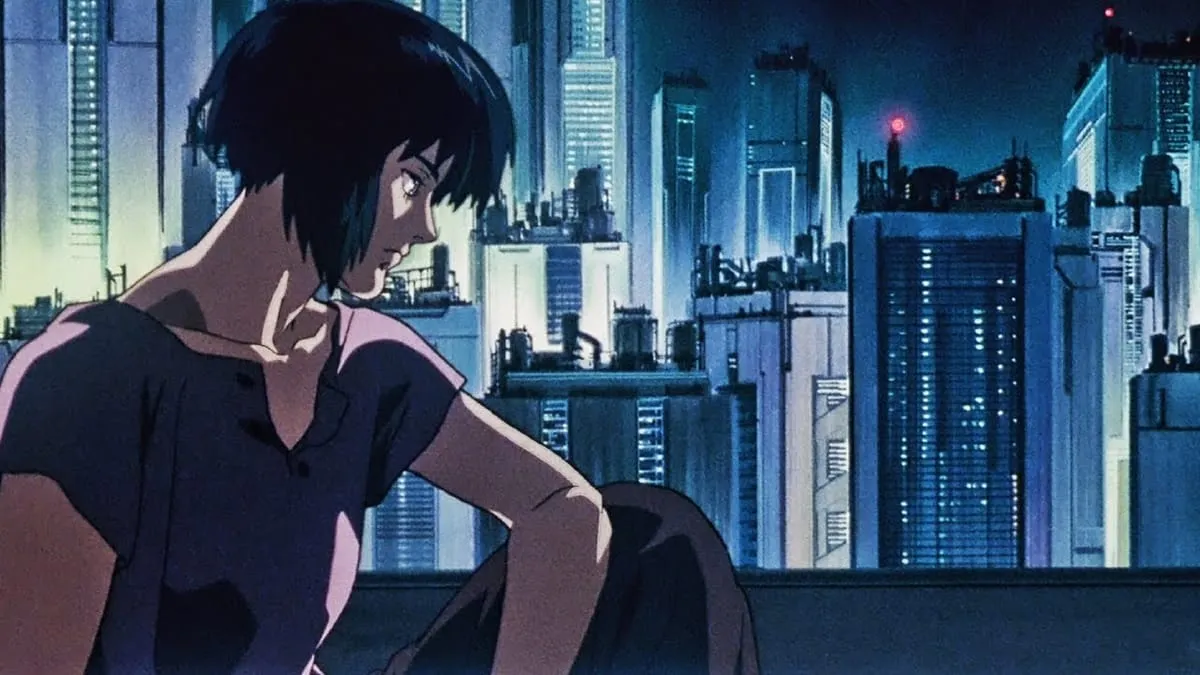
Glitch Witch Extends Ghost in the Shell
ReleasesNaoki Azuma launched Glitch Witch on 4 September 2026 on YanMaga Web. The manga picks up where Masamune Shirow's first Ghost in the Shell left off.
Naoki Azuma launched GLITCH WITCH on Wednesday 4 September 2026 on YanMaga Web, Kodansha’s platform. The manga is set in the world of Ghost in the Shell, created by Masamune Shirow, and picks the story up where the first volume ended. A chapter appears every other week.
What is Ghost in the Shell?
A manga by Masamune Shirow published in 1989, since become one of the most cited works of Japanese science fiction outside Japan, and whose 1995 animated adaptation travelled the world.
Photo: Pat Krupa / Unsplash.
The story follows Motoko Kusanagi, an officer in a police unit specialising in computer crime, in a Japan where the human body is prostheticised and the brain connects directly to networks. The question running through the series is easy to state and hard to settle: if everything can be replaced, what still makes a person themselves?
The title carries that question. “Ghost” denotes, in the series, whatever remains of a person once their body has been replaced: a trace, a signature, something that is neither the soul of religion nor a mere program. “Shell” is the casing, interchangeable. Thirty-five years on, neither term has found a more precise equivalent in ordinary language.
That question has spread far beyond the manga. Western science-fiction writers took it up, and the 1995 film sits among the acknowledged influences on a great many later productions, in cinema and in games alike.
The work has had several lives besides: a second film, animated series in markedly different registers, video games and an American live-action adaptation. Each reinterpreted the material in its own way, to the point where two viewers can discuss Ghost in the Shell without meaning the same thing.
It is into this world that Glitch Witch settles, and that is what makes its launch news beyond the circle of the series’ readers.
Who is Masamune Shirow, and what does “original concept” mean?
The author of the 1989 manga, credited here on concept, which is not the same as on script.
His output has been sparse for years, which makes this credit all the more notable: it is one of the few ways his world continues to appear at all.
Shirow made his name with dense, documented science fiction, heavy with footnotes and with technical mechanisms explained at a seriousness unusual in comics. That manner built his reputation, and it explains why his world supports extensions: it is built as a system, not merely as a story.
The “original concept” credit describes a common practice in Japanese publishing. The originating author supplies the framework, the rules of the world and sometimes the broad strokes, after which another artist takes the series on. They do not necessarily draw or write the chapters, but nothing publishes without their agreement.
For a reader, the distinction matters. A series credited “from an idea by” is not a work by its originating author, and judging it as one leads to disappointment. It is an authorised extension, which is already a great deal: most worlds this size are exploited without their creator being consulted.
That model remains a minority one in Japan, where manga was built on identifying a series with a single author. The exceptions are countable, and almost always concern worlds whose richness exceeded what one artist could draw from them.
What is Glitch Witch about?
The story begins from the end of THE GHOST IN THE SHELL: the merger between Motoko Kusanagi and Project 2501, known as the Puppeteer. From that entity comes a confrontation with a Solomon-class artificial intelligence charged with the fate of humanity.
Around it, the investigation is run by the FBI, AI researchers and the military. This stays in the register of the original manga, the institutional thriller, rather than that of the animated series.
Two choices in that synopsis are worth noting. The first is geographic: the original series is set in Japan, this one settles in the United States, with American institutions. The second is the anchor point chosen, since the series takes up the most argued-over element of the source work rather than inventing a fresh threat.
That second choice is the riskier of the two. Project 2501 is what the 1989 manga deliberately leaves open: an entity born of the network, whose exact nature is never settled. Returning to it means supplying answers where the original declined to, and some long-standing readers will judge the series on that point alone.
We know no more at this stage, and we will not discuss the contents of the chapters published: they are not officially released in English, and our editorial line forbids relaying their detail.
Who is Naoki Azuma?
An established author, not a newcomer handed a trial run. He wrote Keishichō Zōshi and Dragon & Ape.
The choice fits how Kodansha has worked this licence for years: Masamune Shirow keeps authorship of the world, others write inside it. Ghost in the Shell has long operated as a shared universe, in the manner of an American comic book.
For the publisher, the arrangement has a further advantage. It keeps a licence active without depending on the availability of an author who publishes rarely. Shirow has not delivered a long series in years; the world, meanwhile, keeps appearing.
When could an English edition appear?
Not for a year at least, and nothing has been announced. The reason is the publication rhythm.
| Element | Figure |
|---|---|
| Platform | YanMaga Web, digital |
| Frequency | one chapter every 2 weeks |
| Chapters per year | around 26 |
| Collected volume | from 8 to 10 chapters |
Foreign publishers buy collected volumes, not chapters. At this pace the first Japanese volume will not exist for several months, and a translation would follow after that. No English-language publisher has commented on the title.
How often does the series publish?
One chapter a fortnight, on Wednesdays. That is the schedule announced at launch, and it puts the series in an intermediate category worth explaining.
Photo: Micha Frank / Unsplash.
| Schedule | Chapters per year | Typical outlet |
|---|---|---|
| Weekly | about 45 | general-interest print magazine |
| Fortnightly | about 26 | web platform, such as YanMaga Web |
| Monthly | 12 | specialist magazine |
The choice has concrete consequences for anyone following along. Twenty-six chapters a year is enough for a collected volume every four to five months or so, depending on page count. An English edition, should one come, would therefore have little material to work with in its first year.
The schedule also says something about the project. A series launched fortnightly on a web platform is not being treated as a flagship: it is being settled in for the long run, with a workload its artist can sustain. That is the opposite of a weekly magazine’s strategy, which chases immediate impact.
There is a further consequence, rarely noted. A fortnightly rhythm leaves an artist time to finish pages properly, where a weekly imposes a production line that shows in the linework within months. In a world whose visual identity rests on the precision of its backgrounds and machinery, that is no small matter.
What is YanMaga Web?
Kodansha’s digital platform attached to Young Magazine, and one of the outlets on which the publisher now launches new series.
Photo: Albert Stoynov / Unsplash.
The shift from print to web is one of the underlying movements in Japanese publishing over the past decade. It changes three things for a series: launch costs, which fall; page-count constraints, which loosen; and audience measurement, which becomes immediate and precise, where magazine sales told you nothing about which title had landed.
The change also affects what gets published. Freed from a fixed page allocation, a web series can run a longer chapter when the story calls for one and a shorter one when it does not, which print schedules never permitted. Whether that serves the work depends entirely on the artist.
That last difference carries weight. In print, a mediocre series survived a few months inside a magazine selling for other reasons. On a platform, each chapter is read or it is not, and the decision to continue rests on figures the publisher consults the next morning.
Kodansha is not alone here: every major Japanese publisher now runs a platform, and some series exist nowhere else. A reader going by bookshop shelves alone is therefore missing a growing share of what actually publishes in Japan.
It should be said that access from abroad to these platforms depends on accepted payment methods and on the service’s own restrictions. Not all take cards issued outside Japan, and some require a local address. That is the first thing to check before counting on this route.
For a reader abroad, the consequence cuts both ways. Series launched on these platforms are more numerous and cancelled faster, which makes editorial bets riskier for foreign publishers. But they are also easier to follow from outside, where access conditions allow, since they no longer depend on importing a print magazine.
Do you need the original to follow it?
Yes, at least in part, and that is a deliberate feature of the series rather than a flaw.
The official synopsis opens on the merger between Project 2501 and Motoko Kusanagi. To anyone who does not know the original series, that sentence means nothing; to anyone who does, it pins the action to the minute. A spin-off resting on the most argued-over moment of the source work is not courting the passing reader.
Three ways in exist, and they do not ask the same effort.
| Where to start | Length | What you get |
|---|---|---|
| The 1995 film | 1 hr 20 | The themes in concentrated form |
| The 1989 manga | one dense volume | The source text, Shirow’s annotations |
| The animated series | dozens of hours | Broad development, parallel plots |
A fourth route exists, and it is the shortest: read nothing and accept not following everything. Spin-offs in this world are built to work on two levels, the investigation at hand and the references. A reader missing the second still follows the first, losing what gives the series its savour for everyone else.
Anyone starting with the animated series should know that they diverge from the manga considerably, and from one another. Choosing between them is a question in its own right, and not one this article can settle.
The film remains the most economical way of understanding what Glitch Witch is talking about without giving it a month. The original manga stands out for its density: Shirow annotates his own pages, and that layer of text disorients as much as it clarifies.
Have spin-offs become the norm?
They occupy a place Japanese publishing grants them readily, for reasons that are no mystery.
The economics are straightforward enough to state plainly.
A new series must build everything: its world, its characters, its readership. A spin-off inherits all three. The publisher’s arithmetic is therefore favourable from the outset, provided the source world has kept its readers, which is the case here.
There is a second risk, less discussed: continuity. The more instalments a world accumulates, the harder it becomes for a newcomer to know where to begin, and the more the series depends on readers already inside it. American comics have spent decades wrestling with that problem.
The known risk is erosion. A world worked without limit dilutes whatever made it recognisable, and audiences drift. Japanese publishers manage it by spacing projects out and handing each series to an artist bringing their own manner, rather than multiplying imitations of the original style.
Glitch Witch ticks those boxes: a named artist, a measured schedule, a precise anchor in the chronology, and a geography distinct from the original’s. That is no guarantee of success; it is the signature of a project built rather than opportunistic.
The move to the United States serves another purpose too: it avoids direct comparison with the original series, set entirely in Japan. An author taking on a known world has every interest in finding ground of their own, and geography is the simplest way of doing it.
How do you follow an untranslated manga?
Three routes exist, and they are not equivalent.
The first is buying directly on the Japanese platform. YanMaga Web sells its chapters in Japan; access from abroad depends on accepted payment methods and the service’s restrictions. It is the only route that pays the author ahead of an English edition.
The second is waiting. A manga that finds its audience in Japan usually ends up interesting a foreign publisher, and for a niche title the average delay is measured in years rather than months.
The third, scanlation, is not a route here. MangaWire relays no link and no plot summary drawn from a chapter not officially published, and that rule holds for titles nobody will ever translate. The absence of an English edition has never turned a pirated copy into a legitimate fallback.
Why revive this world now?
Because a dormant licence earns nothing, and this one is not entirely dormant.
The original series’ themes have become current affairs. A 1989 work about autonomous artificial intelligences, digital identity and porous boundaries between human and machine reads differently in an era when those subjects occupy courts and parliaments. The distance that made the series speculative has closed.
The anniversary of the original manga plays into it as well. A world approaching four decades since first publication offers a natural occasion, and publishers rarely let those pass unused.
Publishing calendars play their part too. A new series in a known world draws on established recognition without paying the cost of establishing it: readers already know where they are, and the publisher saves the expository chapters. It is the same logic described in our piece on the 99 Attack on Titan announcements, with one difference: this is not a reissue, it is a continuation.
One further signal will be readable over the coming months: whether the schedule holds. A web series slipping its chapters by the third month is signalling either production trouble or a disappointing reception, and publishers draw conclusions faster than they would in print. A calendar kept for a year, conversely, amounts to confirmation, and that is usually when foreign publishers make their move.
Then there is the audience question. A spin-off addresses first those who know the original, which is to say a readership that has aged with it. The fortnightly web bet is precisely about reaching younger readers too, those who arrived through the animated adaptations rather than the 1989 manga.
How do you check what you read about a new series?
A launch announcement attracts a great deal of approximate information, and this one was no exception.
Photo: Esten Erbol / Unsplash.
We ran into it ourselves preparing this article: several reposts gave a launch date of 9 September, where the originating source gives Wednesday the 4th. The discrepancy comes from confusing the first chapter’s publication date with the date of the coverage reporting it.
It also shows how quickly a small error hardens. Nobody checked, because the figure looked plausible and the difference was five days. That is precisely the margin within which mistakes survive.
It is the kind of detail that costs a reader nothing, and costs anyone following the series a good deal: a wrong date shifts the whole fortnightly calendar you derive from it.
The error is also hard to correct once it spreads. Reposts cite other reposts, and the wrong date ends up appearing in more places than the right one, which makes it plausible to anyone checking quickly.
A fourth possibility deserves mention, because it is routinely forgotten: telling a publisher that a title interests you. Publishers track the requests that reach them, and a title asked for regularly enters their deliberations more easily. It is slow and indirect, but it is the only action that genuinely weighs on the decision to translate.
The method stays the same as for any announcement. Go back to the licence’s official account or to the publisher, check that the date quoted is the event’s and not its coverage’s, and be wary of information existing only as a repost. Our guide to reading announcements sets out those habits.
Add to that calendar the time taken by negotiation, which is invisible from outside. An interested foreign publisher often moves before the first volume appears, but the public announcement only comes once the contract is signed and the schedule fixed, several months later. Between interest and announcement, silence is the rule.
One thing works in the title’s favour: the licence is already established in English, where works from this world have been published and the films are widely known. A publisher picking up the spin-off does not have to introduce the setting, which lowers the risk.
Why this licence matters beyond manga
Ghost in the Shell is a rare case: its Western audience far exceeds its manga readership. The 1995 film and the animated series established the licence with a public that, for the most part, never opened Shirow’s manga.
A title extending that manga directly therefore arrives with an identified audience outside Japan, and that weighs on a publisher’s acquisition decisions. It is the opposite of the position an author like Shin’ichi Abe was in, whose work waited fifty years for a translation.
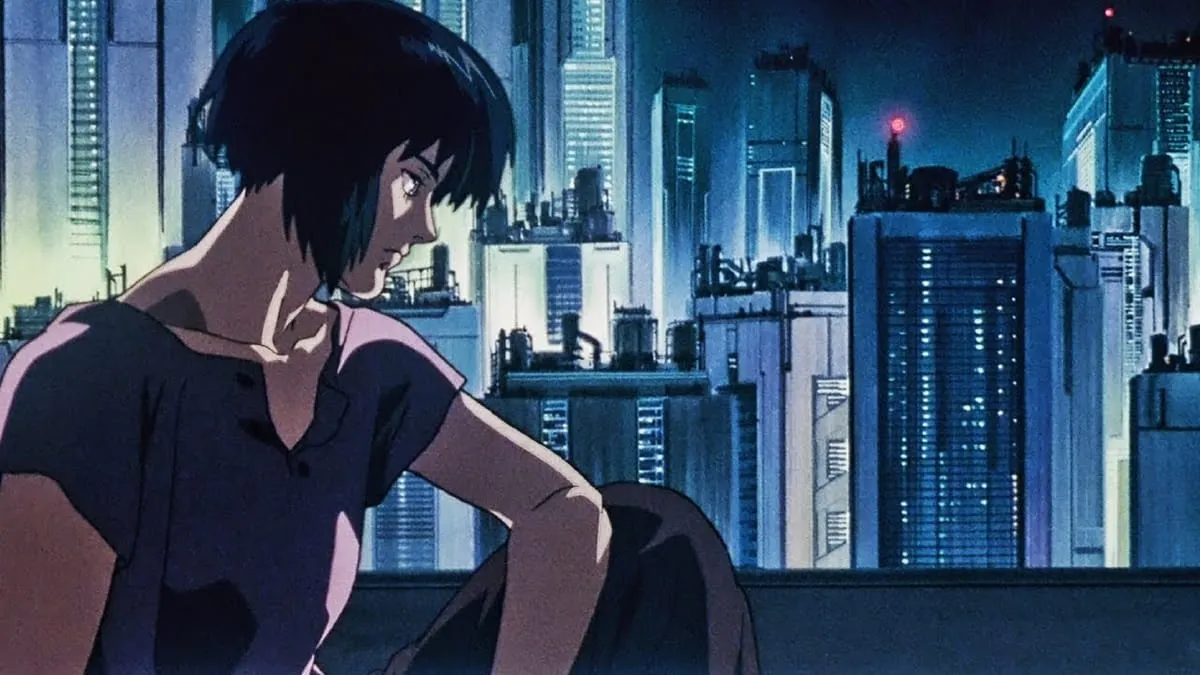
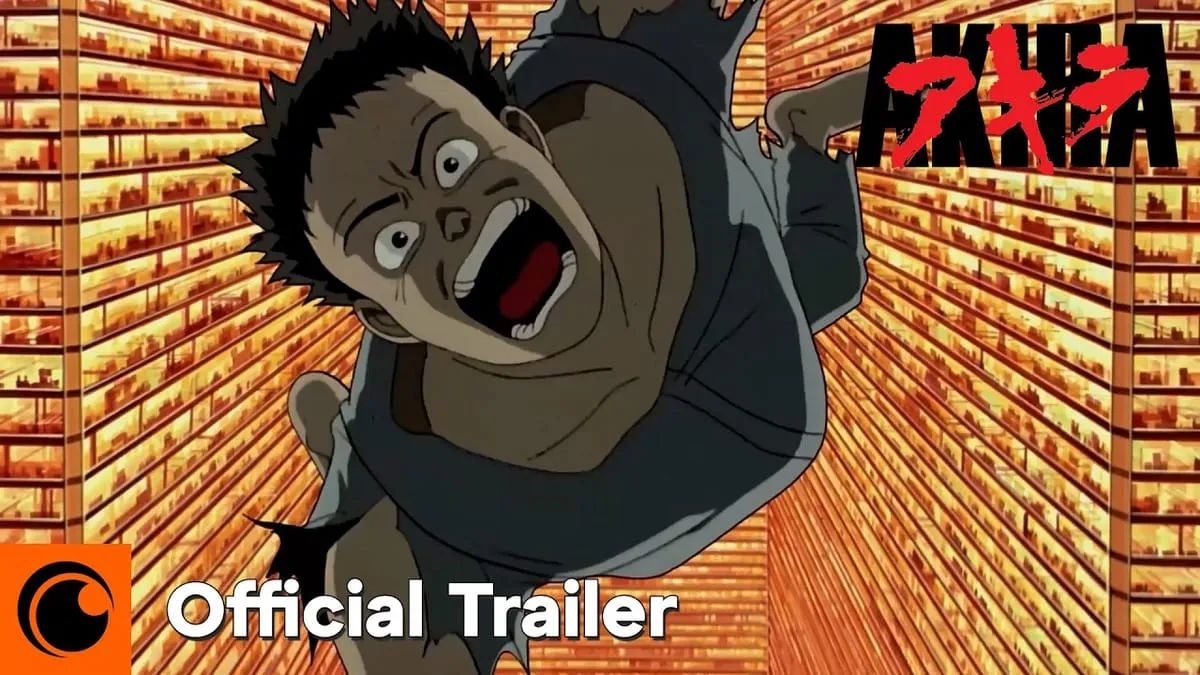
Trailer for the 1995 film in 4K. ©Masamune Shirow/Kodansha, Production I.G. Trailer: IMAX.
Still, “set in the world of” is not “official sequel by the author”. The distinction shapes critical reception as much as the price of the rights, and it is exactly the kind of phrasing worth reading closely in a press release: our guide to announcements explains why.
Comments
Sign in to comment.
A sign-in link is sent to your inbox. Your address must be verified before you can post.