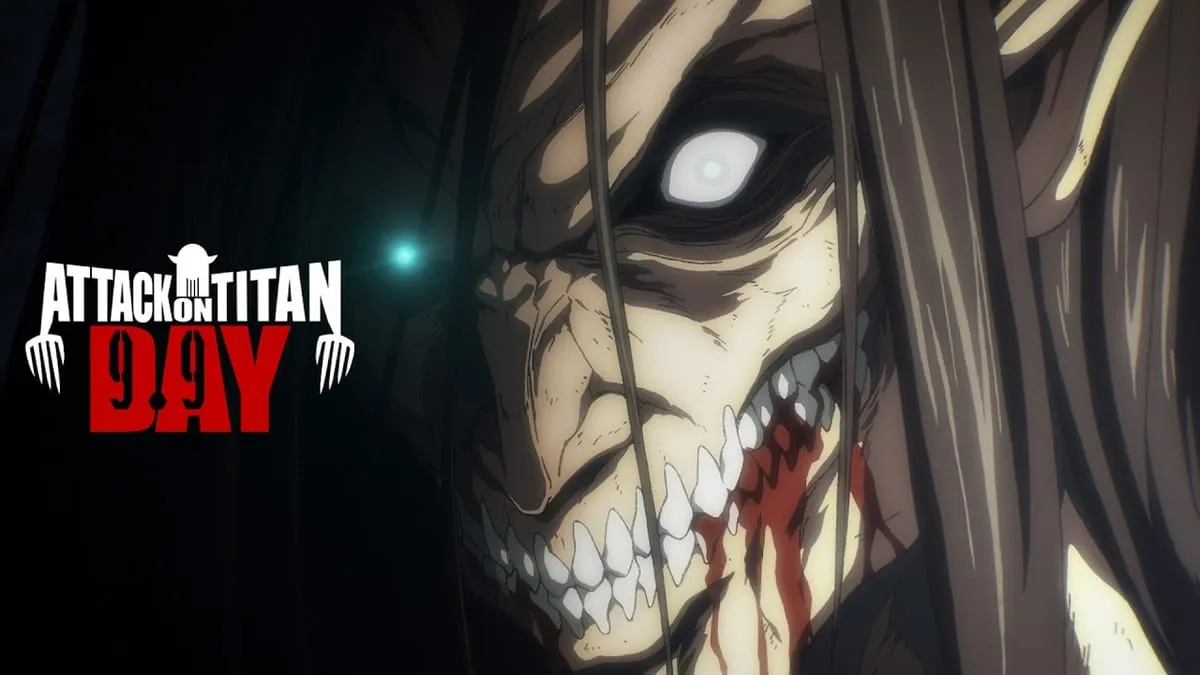
Attack on Titan Day: 99 Reveals
News9 September is now officially Attack on Titan Day. Kodansha opens 99 chapters free for 99 hours and lines up 99 announcements around the world.
9 September is now Attack on Titan Day, a date registered with the Japan Anniversary Association marking 9 September 2009, when Hajime Isayama’s manga began serialisation. For this first official anniversary, 99 announcements were released worldwide, among them the free unlocking of the first 99 chapters.
How do you read the 99 free chapters?
The first 99 chapters can be read without paying on Magazine Pocket, Kodansha’s platform, for 99 hours from 9 September. After that, access returns to paid. The offer covers roughly the first third of the story, up to the arcs that made the series’ reputation.
The number is no accident: 99 chapters, 99 hours, 99 announcements, for the 9th of the 9th. Four days to read a third of a series this dense is not long. A regular reader keeps pace; a newcomer will stop partway, and that is exactly where the subscription takes over.
That free access is no act of generosity. Opening the first chapters of a finished series is the cheapest way to recruit new readers: the catalogue is already paid for, further production costs nothing, and anyone who gets hooked will buy the rest. The tactic is as old as publishing, applied here on a global scale and in a very short window.
What is Attack on Titan Day, precisely?
It is an officially registered date, not an improvised marketing push. The Japan Anniversary Association maintains a register of commemorative days, and listing 9 September places the series alongside brands and institutions.
The date points back to 9 September 2009, the first day of serialisation in Bessatsu Shōnen Magazine. Seventeen years separate that issue from today’s anniversary.
Anniversary video. ©Hajime Isayama/Kodansha. Video: official Attack on Titan channel.
What do the 99 announcements contain?
They cover almost every field where a licence this size can operate.
| Area | Announcement | Date |
|---|---|---|
| Manga | 99 free chapters on Magazine Pocket | 9 September, 99 hours |
| Video | Official YouTube channel, limited rebroadcasts | live |
| Game | Attack on Titan 3, Koei Tecmo | 10 December |
| Cinema | ScreenX, 4DX and ULTRA 4DX screenings | scheduled |
| Artwork | New illustration by Hajime Isayama | revealed |
Added to that are collaborations with Sanrio, Team Liquid, MSI and ROUND1, figures from several manufacturers, merchandise through the Shonen Magazine Shop, and events in South Korea, Taiwan, Thailand, Australia, Europe and Africa.
How many volumes does Attack on Titan run to?
Thirty-four volumes and 139 chapters. Serialisation ended on 9 April 2021 in the May issue of Bessatsu Shōnen Magazine, after eleven and a half years.
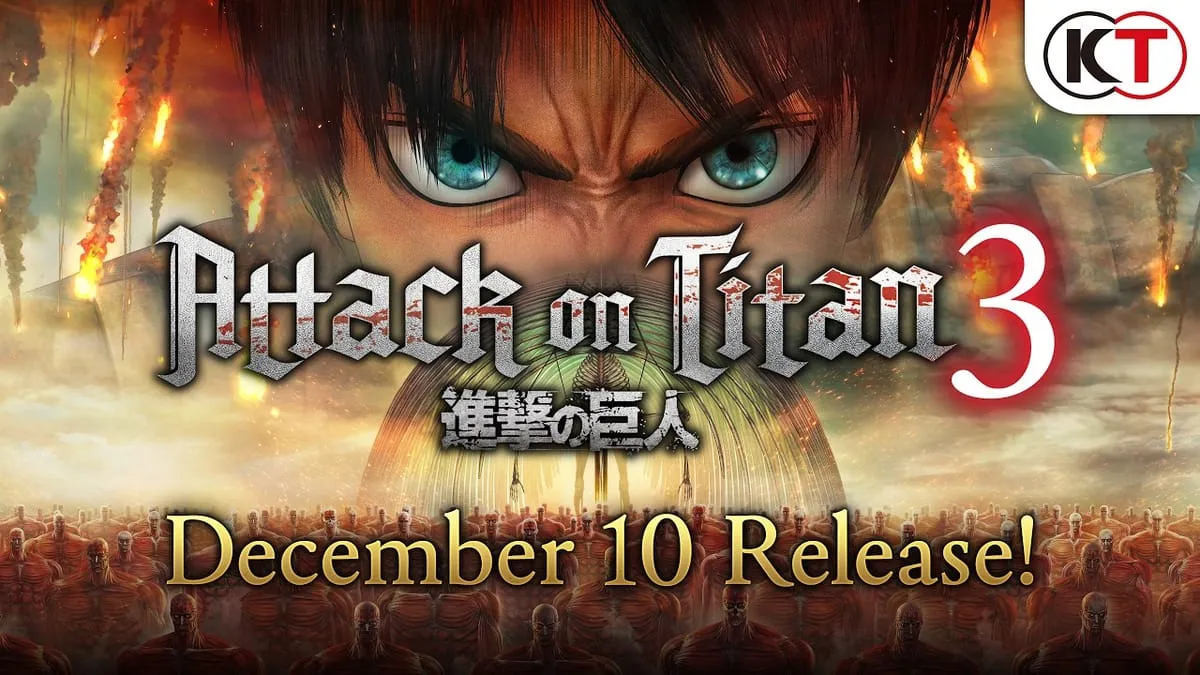
©Hajime Isayama/Kodansha. Trailer: Koei Tecmo America.
| Figure | Value |
|---|---|
| Volumes | 34 |
| Chapters | 139 |
| Serialisation began | September 2009 |
| Serialisation ended | April 2021 |
| Magazine | Bessatsu Shōnen Magazine, monthly |
That figure of 34 volumes is worth placing. A monthly series running eleven years accumulates fewer volumes than a weekly of the same length, and that changes the entry cost for a new reader entirely. Thirty-four volumes is a real investment but a finite one; established weekly series often run past a hundred.
The monthly rhythm also shaped how the series was received. Readers had four weeks between chapters to argue over what they had just read, which turned each turn of the plot into a month-long discussion. A weekly series gives no such room, and the conversation around it never builds in the same way.
It also explains the density of the storytelling. Twelve chapters a year force each one to count, without the transitional episodes a weekly schedule tolerates. It is one reason the adaptation could follow the manga with almost no filler.
In how many countries is the manga published?
Eighteen territories, going by those Kodansha lists officially on its licensing page. The list repays a close look, because it explains why an announcement made in Tokyo lands everywhere on the same day.
| Region | Territories Kodansha lists |
|---|---|
| Europe | France, Germany, Italy, Spain, Poland, Finland, Czechia, Russia, Turkey |
| Americas | United States, Mexico, Brazil, Argentina |
| Asia | South Korea, Taiwan, Thailand, Indonesia, Vietnam |
All three languages we cover appear on it. English through the United States, French through France, Spanish through Spain, Mexico and Argentina. A series covering those four markets at once is rare, and that is what makes the 99-announcement operation legible: it targets a network already in place, not a single country.
That coverage has a practical consequence for readers. When Kodansha opens its chapters, access depends on each territory’s platform rather than on one decision valid everywhere. An offer announced worldwide can stop at a border without anyone having hidden anything: the licence map decides, not the press release.
What the list leaves out is instructive too. The United Kingdom does not appear, nor does Canada: American editions circulate there directly, without a separate licence. Anyone wondering why a volume ships on different dates from one country to the next has part of the answer.
Note that this list covers manga licences, not those for the animated adaptation, which are negotiated separately and with different platforms. A country can watch the series without the manga being published in its language, and often does.
What awards has the series won?
Three that Kodansha highlights, and they come from different worlds.
The Attilio Micheluzzi Award is Italian, given at the Naples festival, and recognises comics regardless of origin. The Harvey Award is American, one of the field’s two major professional prizes alongside the Eisner. The third has nothing literary about it: most in-demand television series in the world for 2021, awarded at the Global TV Demand Awards, which measures audience interest across platforms.
That spread says something about the series’ path. It was recognised as manga in Europe, as comics in the United States, then as a global television phenomenon. Few titles climb all three steps, and that is what makes an anniversary commercially defensible five years after the manga ended.
Worth noting is what the list does not contain: no award from within Japan itself. That absence reflects how these things are counted rather than any slight, Japanese prizes being awarded on different criteria and rarely translated into the lists publishers assemble for foreign partners.
None of these awards goes to Isayama as an author. They go to the work or its adaptation, which matches the position he has held since publication ended: he made it known that he wanted no sequel, and the licence has run without him since.
The shape of the 99 announcements confirms it. None concerns the manga itself; all orbit it: video games, collaborations, merchandise, events, exhibitions. A Japanese publisher no longer sells volumes alone, it manages a portfolio of derivative rights, each with its own calendar.
Why does a finished licence still fill a calendar?
Because a catalogue pays out longer than a new release. The manga is finished, the anime has aired its conclusion, and yet Kodansha is running an international calendar across several continents. That is the mark of an operation planned for the long term, independent of publication schedules.
The model has become standard at the major Japanese publishers. An established series needs little fresh investment, and its audience already exists. The difficulty is not keeping that audience; it is bringing in a new one.
One caution about time-limited offers of this kind. Availability depends on the territory you connect from, and a promotion announced worldwide may not apply where you are. Checking on the official platform for your region takes less time than looking for an explanation afterwards.
Where can you read Attack on Titan legally in English?
The series is published in English by Kodansha USA, which has translated it in full in collected volumes. That is the simplest route, and the only one that pays the author and the originating publisher.
Several formats sit side by side in bookshops: the standard edition, oversized editions gathering several volumes at once, and box sets. The choice comes down mostly to shelf space and budget: a series this long is a substantial outlay in single volumes.
One question the anniversary operation raises by implication remains. An offer limited to 99 hours on a Japanese platform rewards those who read Japanese first. For an English-language reader, the only lasting legal access is still buying, in print or digitally through the retailers carrying the Kodansha USA catalogue.
Why did the anime change studio partway through?
Because WIT Studio judged that it could not continue. The producers described it in the November 2020 issue of Newtype: the decision came during production of season three, after discussion with the studio that had carried the series since 2013.
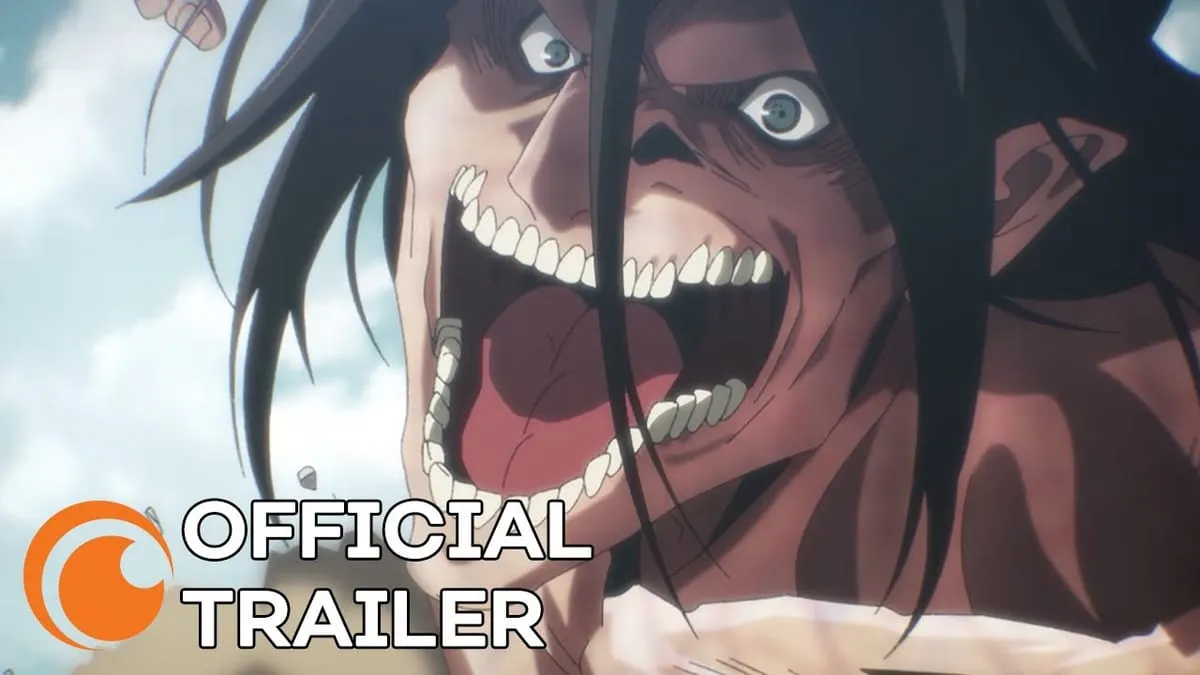
©Hajime Isayama/Kodansha, MAPPA. Trailer: Crunchyroll.
The reason lies in what the story becomes. Season three closes on a character facing the ocean, the point where the series shifts from a siege behind walls to a conflict of an entirely different scale. The producers wanted the anime to rise with it, and WIT made clear that what followed would be hard to take on.
What makes the episode interesting is what came next. The producers approached other studios, and most declined. Only one agreed to look at it: MAPPA. The detail says a great deal about the Japanese animation industry, where studios able to absorb a series at this level can be counted on one hand, and where their schedules are booked years ahead.
| Season | Studio | Broadcast |
|---|---|---|
| Season 1 | WIT Studio | April 2013 |
| Season 2 | WIT Studio | April 2017 |
| Season 3, part 1 | WIT Studio | July 2018 |
| Season 3, part 2 | WIT Studio | April 2019 |
| Final season | MAPPA | December 2020 |
The handover went smoothly. WIT said it was reassured to leave the series with MAPPA, and the producers followed. This is a long way from the conflict such a change usually suggests: it was an industrial decision, taken by people who knew what a final season would demand.
This episode has become a reference point in the industry. It gets cited whenever a series changes studio, usually to remind everyone that such changes imply no falling-out: production capacity is finite, schedules are full, and a studio that declines sometimes protects the work better than one that accepts beyond its means.
What does Isayama’s publication rhythm tell us?
Four years separate the first season from the second. That is a long gap, and the manga’s rhythm explains it: a monthly series produces twelve chapters a year where a weekly produces forty-eight. The anime was catching up with its source faster than Isayama could write it.
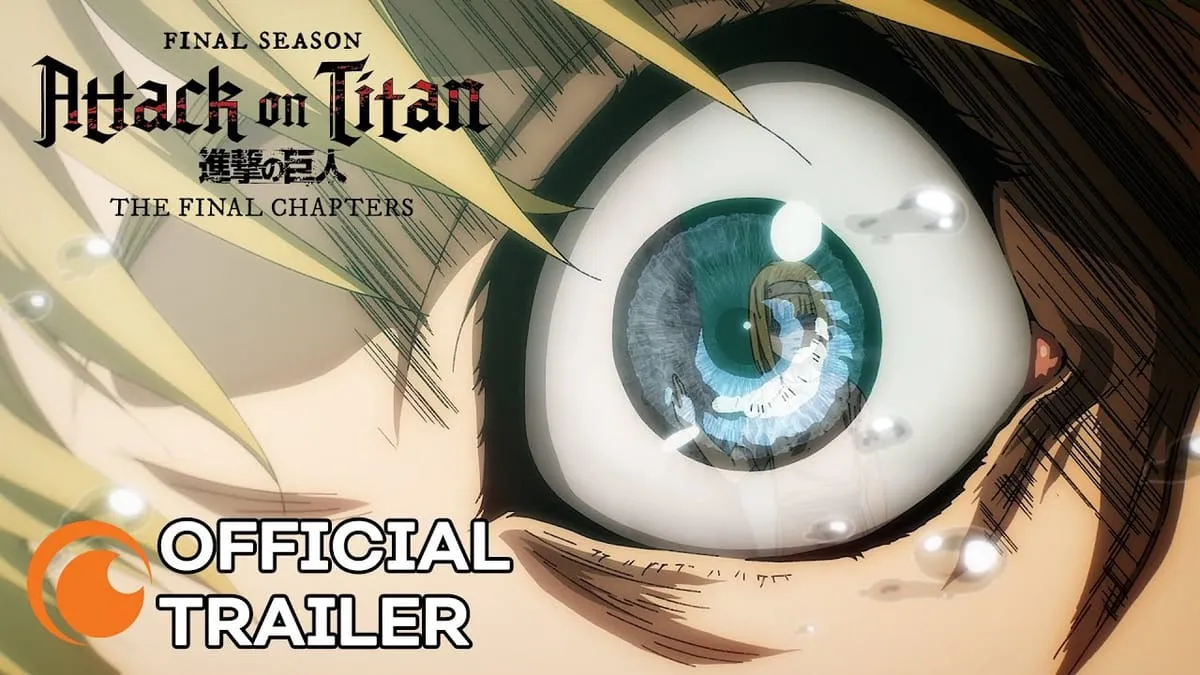
©Hajime Isayama/Kodansha, MAPPA. Trailer: Crunchyroll.
That gap is the structural problem of any faithful adaptation. Two solutions exist: slow down by inventing filler episodes, or wait. Attack on Titan chose to wait, which explains both the pauses between seasons and the near-total absence of filler.
The comparison with series running today throws the gap into relief. An established weekly title puts out a collected volume every two to three months; a monthly like Isayama’s manages two or three a year. The cost of catching up therefore has nothing to do with the series’ length alone, and few readers check that rhythm before starting.
For a reader, the consequence is immediate and still applies. A finished series can be read straight through, with no waiting; that is exactly what the 99-hour offer proposes to test, across a third of the journey. Those who followed publication between 2009 and 2021 waited twelve years for the ending, month by month.
How do you check that an anniversary announcement is official?
An operation this size attracts false stories, and the 99 announcements produced their share within hours. Three habits are enough to sort them.
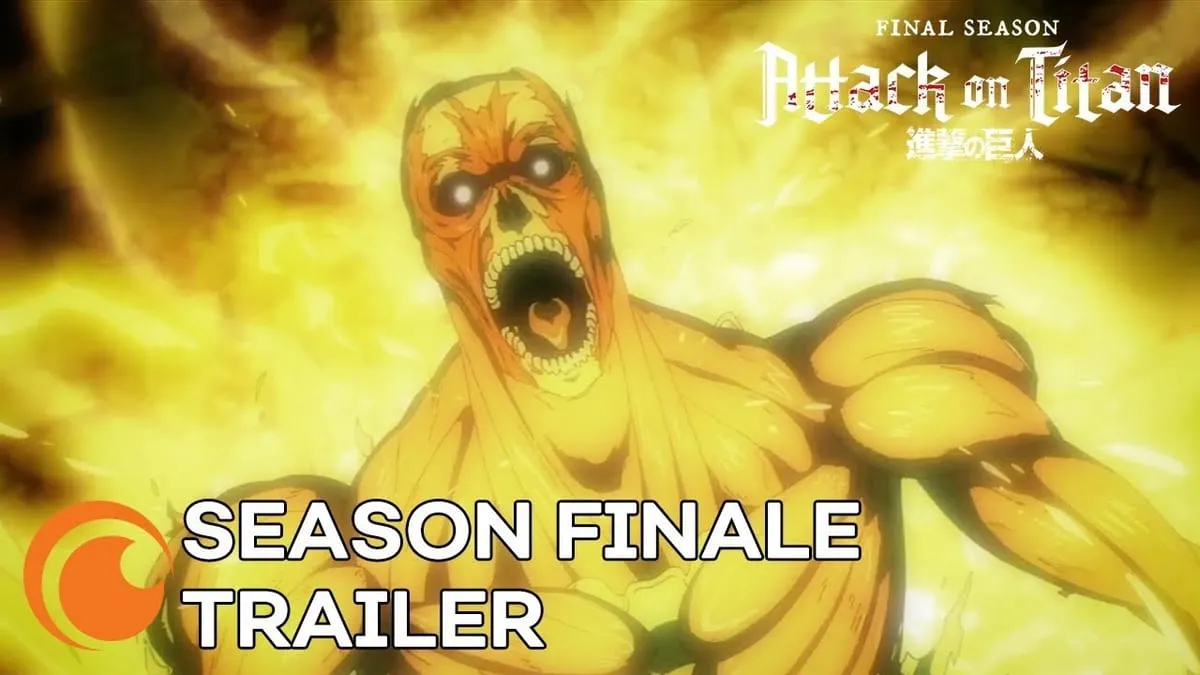
©Hajime Isayama/Kodansha, MAPPA. Trailer: Crunchyroll.
The first is to trace the account posting it. Kodansha, the series’ official accounts and the licensed publishers in each country announce what concerns them directly. An announcement existing only on an aggregator account, with no link to any of them, is not an announcement: it is a repost, and often a distorted one.
The second is to check the date. An anniversary surfaces old material that accounts republish without noting its age. A trailer for a season broadcast in 2023 looks very much like one for something new when it is presented without a date.
The third is to distrust whatever is too expected. A sequel to the manga has been announced at every anniversary since 2021, and it has been false every time. Isayama has said his story is finished, and nothing in the 99 announcements contradicts him: none concerns the manga itself, all concern what surrounds it.
We set out this method, with the wordings that should raise a flag, in our guide to reading a manga announcement. It holds for any licence, not only this one.
How long does it take to read 99 chapters?
The question genuinely matters, since the offer runs for 99 hours and not one more.
A monthly magazine chapter runs forty to fifty pages. Allow fifteen to twenty minutes per chapter at a normal reading pace, slightly less if you already know the world. For 99 chapters, that puts a complete read between twenty-five and thirty-three hours.
| Pace | Time per day | Chapters per day | The 99 chapters in |
|---|---|---|---|
| Occasional | 1 hour | 3 to 4 | 25 days |
| Regular | 2 hours | 6 to 8 | 13 days |
| Intensive | 6 hours | 20 to 24 | 4 days |
The 99-hour window comes to four full days. It is achievable in the abstract, provided you give it six hours a day, which is far from obvious over a period falling midweek. For most readers, the offer will cover the first half of the story, slightly less than the chapters behind the anime’s first three seasons.
That is most likely the publisher’s calculation. Ninety-nine chapters out of a hundred and thirty-nine is enough to reach the point where the series turns, and too few to learn how it ends. Anyone stopping there has good reason to buy the rest, which is exactly what Kodansha’s page offers as the window closes.
In what order should you read the manga and watch the anime?
There is no single answer, but there is an order that avoids most of the trouble.
The manga is the original work and it is complete. Reading it first gives you the whole story, with an ending its author wrote without schedule pressure. The drawback is bulk: thirty-four volumes is an investment of time and money not everyone wants to make up front.
The anime follows the manga closely, with almost no filler, which is uncommon. Watching it first works perfectly well, and the 99-chapter offer is precisely an opportunity to compare the two formats over the same material.
| If you start with | What you gain | What you lose |
|---|---|---|
| The manga | The complete story, Isayama’s art | Several weeks of reading |
| The anime | Pacing, score, animation | Detail in the panels and the text |
| The 99 chapters | A free trial of the first half | The ending, which sits outside the offer |
One practical point favours the manga for anyone hesitating on cost. The 99-chapter offer covers roughly the first half of the story at no charge, which means a reader can judge the series properly before committing to the thirty-four volumes. Few long series can be sampled that far in.
What to avoid is switching between the two without method, since the seasons do not map onto clean breaks in the manga. Anyone moving from the anime to the manga would do well to pick up somewhat before the point they left off.
What is still to come after the 99 chapters?
Forty chapters, which is to say the second half of the story and everything that made it argued over.
The offer stops just before the turns that divided readers. Anyone taking it up will reach the point where the series changes in kind, without seeing where that change leads. The cut is deliberate, and it works: the curiosity it leaves is exactly what the publisher sells next.
Two routes carry on from there. Digital reading platforms sell volumes individually, at a per-volume price below print. Bookshops sell the printed edition, dearer but resaleable and lendable. Across thirty-four volumes, the gap between the two is wide enough to be worth working out in advance.
One caution for anyone looking for shortcuts: chapters circulating outside official platforms come from unauthorised copies. We link to none of them and discuss their contents nowhere, here or in any other article.
What does this operation say about the market?
That a well-managed back catalogue earns for far longer than a new release does.
Attack on Titan ended five years ago. The licence nonetheless keeps generating video games, exhibitions, collaborations and merchandise, and an operation like this one returns it to visibility at no production cost. For a publisher, it is a written-down asset that still pays.
The same logic runs across the sector. Restored reissues, deluxe formats, time-limited offers on older catalogue: all are ways of working an existing library rather than gambling on a new series, with an audience already in place and far less risk.
The limit is well known. A world exploited without restraint eventually tires its audience out, and readers drift away. Kodansha appears to be measuring it: the operation runs 99 hours and will not return within the year, which keeps it exceptional.
For readers the effect cuts both ways. These operations make works cheaper to reach that would otherwise cost a good deal, while shifting editorial investment towards the proven at the expense of new series. Both things are true at once.
What the operation says about Kodansha’s strategy
The temporary unlock is not a gift to day-one readers: they already own the volumes. It targets people who watched the series go by without ever opening it, and who baulk at thirty-four volumes to buy.
A free first third is the standard shape of that push, at Kodansha as at Shūeisha. It rests on a simple calculation: a reader stopped midway through a story they have started will pay to find out how it ends. The 99-hour window exists precisely to make that stop likely.
One unknown remains, on which the publisher has said nothing: no information has been given about a printed anniversary edition, in English or elsewhere. On telling what is settled from what is not, our guide to reading a manga announcement sets out the method.
Comments
Sign in to comment.
A sign-in link is sent to your inbox. Your address must be verified before you can post.