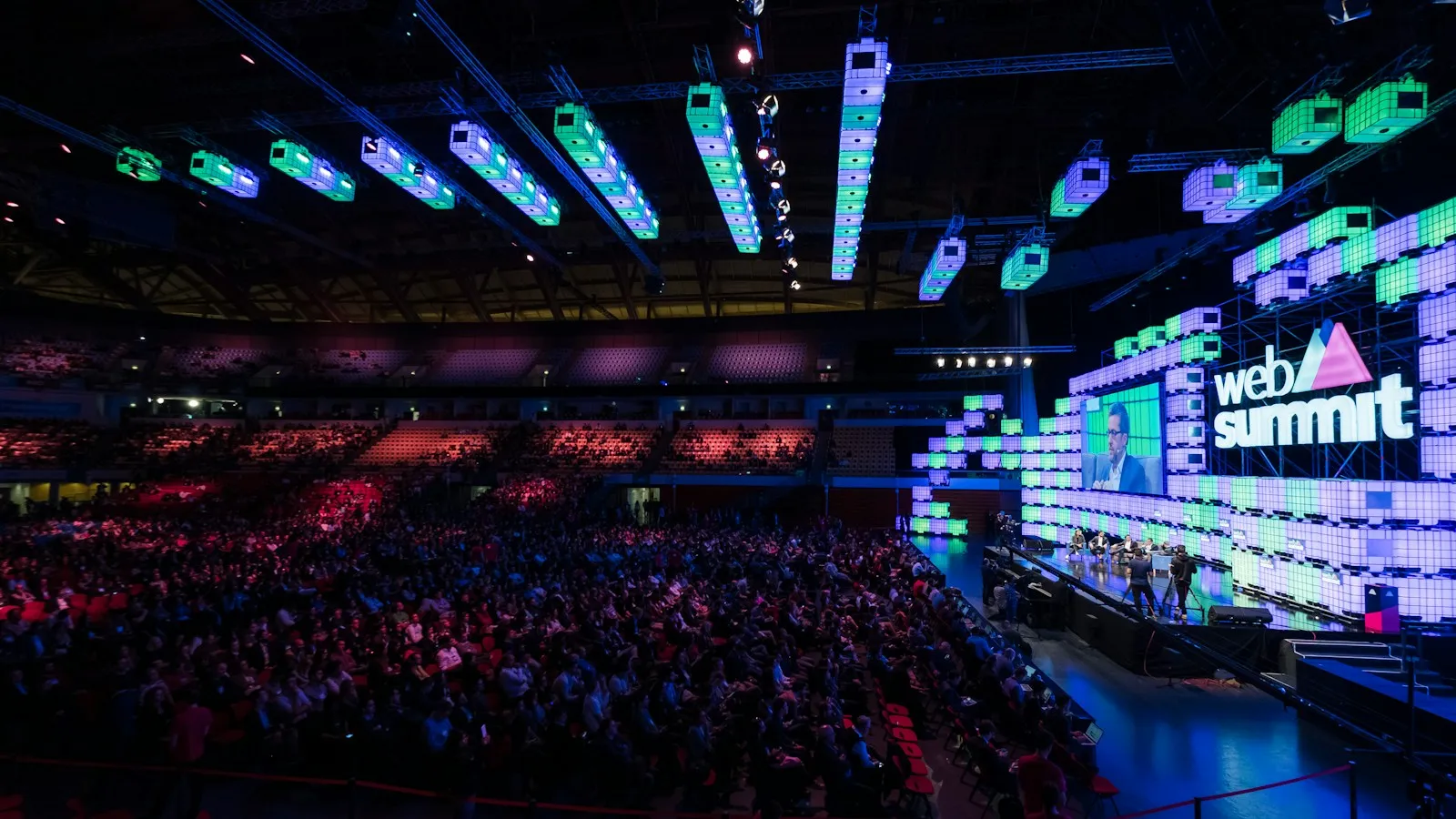
Tokyo Game Show: 257,642 visitors
IndustryTokyo Game Show 2026 reports 257,642 visitors across four days, down from 263,101 in 2025. The fifth day, a first for the show, was cancelled by a typhoon.
Tokyo Game Show 2026 drew 257,642 admissions across four days, from 17 to 20 September, at Makuhari Messe in Chiba. The previous edition counted 263,101. The show was due to run for five days for the first time in its history: the fifth was cancelled because of a typhoon.
How many visitors did the show draw?
257,642 admissions across four days, split very unevenly between the industry days and the public days. The first two days, reserved for trade and press, account for roughly 41% of the total. The two days open to the public take the rest.
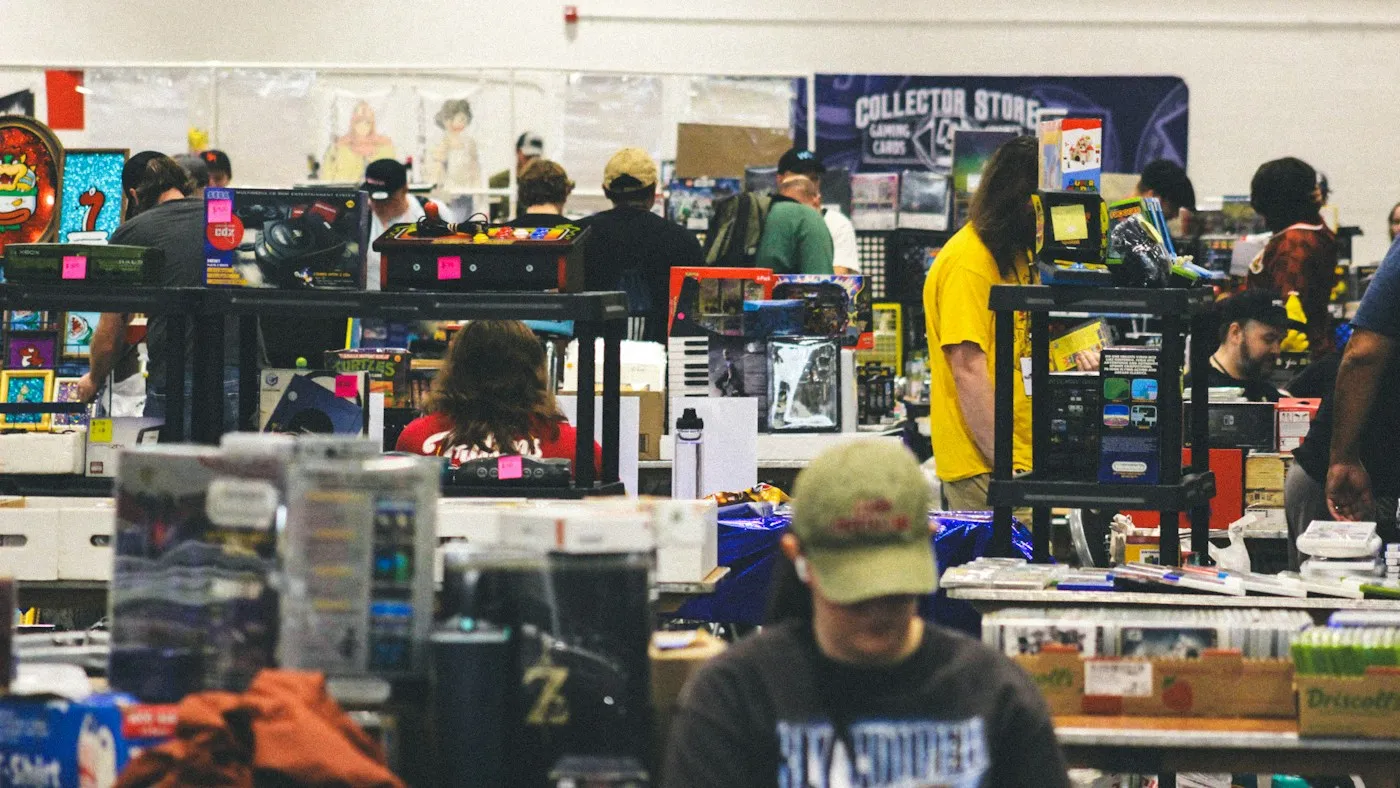
Photo: Aaron Douglas / Unsplash.
The day-by-day breakdown released by the organisers reads as follows.
| Day | Date | Audience | Admissions |
|---|---|---|---|
| 1 | Thursday 17 September | Trade | 53,630 |
| 2 | Friday 18 September | Trade | 52,545 |
| 3 | Saturday 19 September | Public | 78,678 |
| 4 | Sunday 20 September | Public | 72,789 |
| 5 | Monday 21 September | Public | cancelled |
Saturday is the busiest day, which surprises nobody: it is the first day open to the public, when those who want to see the new titles before anyone else turn up. Sunday falls back by 7,500 admissions, a usual gap between the two public days of a trade show.
What does deserve attention is how steady the two industry days are. 53,630 then 52,545: a gap below 2%. Trade visitors come to work, and their attendance depends neither on the weather nor on how they feel that morning.
Is attendance actually falling?
Yes, slightly. On a like-for-like basis, four days against four days, the show loses 5,459 admissions, a 2.1% decline. The order of magnitude is that of a stable edition, not a collapse.
The like-for-like point matters, because it is easy to miss. The 2026 edition was meant to be the first to run five days, under a theme promising five uninterrupted days of play. With the fifth day cancelled, the show ended up running the same number of days as the year before. The comparison therefore holds, and the decline is real.
| Edition | Days held | Admissions | Change |
|---|---|---|---|
| 2025 | 4 | 263,101 | baseline |
| 2026 | 4 of 5 planned | 257,642 | -2.1% |
What the figure does not tell you is what the fifth day would have added. An extra public day would in all likelihood have brought several tens of thousands of admissions, and the 2026 edition would have posted a record. We will not put a number on it: nobody knows how many people would have travelled on a Monday, a working day, in uncertain weather.
The honest reading fits in one sentence. The show slips a little on its usual format, and it missed its chance to break its record on a longer one.
One further caveat applies to any weather-dependent event. A show held outdoors in part, on a site reachable by a single rail line, in the middle of typhoon season, carries a variance that has nothing to do with how well it is run. Reading 2.1% as a judgement on the organisers, the line-up or the state of the industry would be reading far too much into it.
The figure to watch is the trend across several editions, not the gap between two. One year tells you almost nothing; five years tell you whether a show is growing, holding or fading. We will keep the series as the editions accumulate.
Why admissions rather than visitors?
Because the show counts entries, not people. A visitor who comes all four days counts four times in the total. The organisers say so themselves, which is more transparent than most comparable events, but it changes how the figure should be read.

Photo: Aaron Douglas / Unsplash.
The consequence is simple: the real number of people present is lower, and by an unknowable margin. Trade visitors, who often attend both of their reserved days, are mechanically counted twice. Part of the public returns on Sunday having already come on Saturday.
This convention is not a trick, and it holds steady from year to year. That is precisely what makes it usable: comparing 257,642 with 263,101 is meaningful because both figures are built the same way. Comparing Tokyo Game Show attendance with another show’s, by contrast, requires checking that both count the same thing, which they rarely do.
One last caution, true of every trade show: the published figure is the organiser’s. No independent third party verifies it, and it doubles as a sales argument for next year’s exhibitors. We report it as such, neither disputing it nor treating it as a measurement.
What happened on the fifth day?
A typhoon led the organisers to cancel Monday 21 September. It was the third day open to the public, and the show’s last. Tickets bought for that date are being refunded.
Cancelling a whole day for weather is rare but not exceptional in Japan, where typhoon season runs from May to October and peaks in August and September. A show held in mid-September on Tokyo Bay takes that risk every year.
Makuhari Messe, where the show is held, sits in Chiba on the eastern shore of the bay. The site is served essentially by one rail line from Tokyo, and Japanese operators suspend service pre-emptively when a typhoon approaches. Keeping a public day open in those conditions would mean bringing in tens of thousands of people with no guarantee they could get home.
The decision makes sense, and it says a good deal about the calculation event organisers must make in Japan. Adding a day to a show raises potential attendance, and raises the odds of landing on an unusable one.
Who exhibits at Tokyo Game Show?
1,138 companies and organisations from 53 countries and territories. The figure places the event among international trade shows rather than national gatherings: more than half the exhibitors are not Japanese.
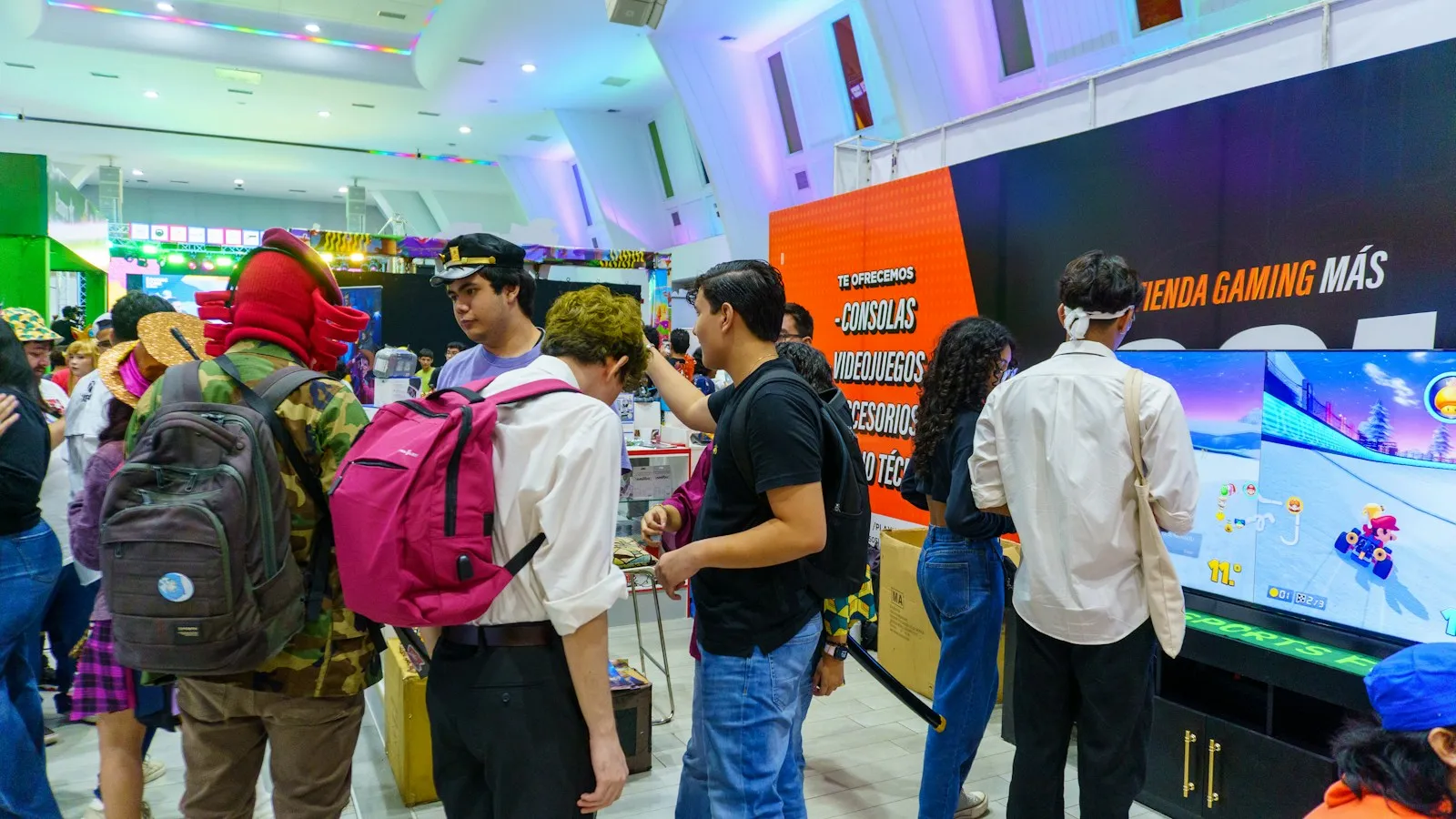
Photo: Les Taylor / Unsplash.
This internationalisation is the clearest change of recent years. Tokyo Game Show was for a long time the Japanese industry’s show, where local publishers presented games built for the domestic market to local players. It has become a stop on the global calendar, alongside Gamescom in Cologne.
Exhibitor count is not as reliable a health indicator as it looks. A ten-square-metre stand and a thousand-square-metre stand each count as one. Floor space sold, meanwhile, is not disclosed, and it is the number that would best say whether publishers are investing or retreating.
What the figure does show is the breadth of the line-up. The 53 countries represented include a substantial share of independent studios, for whom the show is often the only chance to put a game in front of a Japanese publisher.
That matters more than it sounds for English-speaking players. A Japanese publisher who signs a Western independent title at the show is also a publisher who has built the habit of working across languages, and those are the houses whose manga and anime licences tend to reach English release fastest.
Does a trade show still matter when announcements happen online?
Yes, but for reasons that have changed. Announcements no longer need a show: a video posted on a Tuesday evening reaches more people than a conference in Chiba. What still needs a show is letting people play.
Tokyo Game Show 2026 streamed 25 online programmes, on the official YouTube channel, on X and on Twitch, as well as niconico. Coverage extended to DouYu and bilibili for China, and to IGN for Europe and North America. Anyone could follow the essentials without leaving home.

Photo: Aaron Douglas / Unsplash.
Why, then, did 151,467 people turn up across the two public days? Because you cannot hold a controller through a screen. Hands-on play remains the one thing a show does better than a stream, alongside meeting people: queues at playable stations are the real measure of interest in a title, and publishers watch them closely.
The consequence for reading the numbers is direct. Falling attendance no longer means a show is losing relevance, since part of its audience has moved online. It means only that fewer people travelled, which is a different piece of information.
What is the connection with manga?
A constant one, and it explains why we cover this show. A notable share of the games announced in Japan comes from manga and anime licences, and Tokyo Game Show is often where those adaptations are shown first.
The traffic runs both ways. A hit series yields a game, almost mechanically, because the licence is already known and the audience identified. Conversely, a game that performs sometimes yields a manga, serialised in a magazine and then collected in volumes.
Photo: Aaron Douglas / Unsplash.
For a manga reader, the show is therefore useful twice over. It announces adaptations of series you follow, and it shows how Japanese publishers are working their catalogues. A licence that gets a big-budget game is a licence its publisher is betting on, and that information is often worth more than a press release.
The delay between the two is where expectations usually go wrong. A game announced in Chiba in September rarely reaches English-speaking markets inside a year: translation, voice recording, ratings submission and platform certification each take their turn. Eighteen months is a fair working assumption, and a simultaneous worldwide release remains the exception rather than the rule, reserved for the largest licences.
We apply the same rule here as everywhere else on the site: we report what is officially announced, and we wait for the announcement before writing about it. Port and adaptation rumours that circulate ahead of a show belong to another category, and we label them as such when we cover them. Our guide to reading an announcement sets out the distinction.
How do you follow the show from outside Japan?
Free of charge and live, with one caveat that changes depending on where you are: the time difference. Japan is eight hours ahead of London in September, thirteen ahead of New York and sixteen ahead of Los Angeles.
In practice, a conference starting at 10am in Chiba airs at 2am in London, 9pm the previous evening in New York and 6pm in Los Angeles. West coast viewers get the most comfortable slot of anyone outside Japan; British viewers get the worst.
Programmes stay available afterwards, which softens the problem, but announcements travel across social networks within minutes: watching later usually means discovering an announcement you have already read about.
The approach we recommend comes down to two points. First, identify in advance the two or three programmes covering the licences you follow, rather than watching everything: across 25 streams, the substance sits in a handful of slots. Second, check announcements on the publisher’s own site before treating them as settled, because show coverage is particularly prone to approximation.
Thirty years of Tokyo Game Show, what does that represent?
A whole industry, seen from the same room. The first Tokyo Game Show was held in 1996, making the 2026 edition the thirtieth. The organisers have given it a dedicated website, which for a trade show amounts to acknowledging that it has become an institution.
The founding year is worth a pause. 1996 is also when the first Pokémon games were released in Japan, a licence that would become one of the most profitable in the world across any category, feeding manga, animation, trading cards and merchandise for three decades. The show and that licence grew up together, and part of what is displayed in Chiba today descends directly from that period.
What thirty years of the show reveal is above all a shift. The early Tokyo Game Show addressed the Japanese domestic market, at a time when that market dictated formats to everyone else. The consoles were Japanese, the major licences were too, and a Western publisher who wanted to exist in Japan had to show up.
The relationship inverted, then rebalanced. Japan is no longer the largest market, mobile has taken a place nobody anticipated in 1996, and independent studios from fifty-three countries now occupy part of the floor. The show remains, but it no longer measures the same thing: it no longer says where the global industry is going, it says what Japan is showing the world.
For a manga reader, that shift has a concrete consequence. Game adaptations no longer target Japanese players alone, they launch simultaneously in several languages, and an announcement made in Chiba bears directly on an English-language release twelve to eighteen months later.
Why does the venue matter so much?
Because it sets both the show’s capacity and its exposure to risk. Makuhari Messe occupies eleven exhibition halls, plus an international conference hall and a neighbouring venue. It is one of Japan’s largest exhibition sites, and it sits in Chiba, on the eastern shore of Tokyo Bay.
That location has a simple explanation: there is no site of this scale available inside Tokyo itself. Japan’s large trade shows are therefore held on the edges, on land reclaimed from the bay, and Makuhari Messe is one of them, as is Tokyo Big Sight, home of Comiket.
The consequence is logistical, and it explains the fifth day’s cancellation. The site depends essentially on one rail link from Tokyo, and Japanese operators suspend service pre-emptively as a typhoon approaches. A show filling eleven halls cannot function if visitors can neither arrive nor leave.
The hall count also says something about the event’s health. A shrinking show cuts its floor space before its attendance drops: exhibitors leave before visitors do. Eleven halls filled by 1,138 exhibitors remains the profile of a show in good shape, whatever the 2.1% of admissions lost.
One unknown will stay unknown. Floor space actually sold is not disclosed, nor is its year-on-year movement. It is nonetheless the figure that would best say whether publishers are investing or retreating, and its absence is a constant in trade show communication, in Japan as elsewhere.
What should you look at when attendance is not enough?
Three indicators, all more telling than a headline admissions total, and all harder to obtain. The attendance figure has the advantage of existing and of being published every year; that is more or less its only merit, and it says nothing about what happened inside the halls.
| Indicator | What it actually measures | Published? |
|---|---|---|
| Total admissions | Footfall, repeat entries included | Yes, every year |
| Floor space sold | What exhibitors actually committed | No |
| Queues per game | Public interest, title by title | No, observed on site |
| Trade meetings | The show’s commercial activity | No |
Floor space is the most revealing number, and it is never released. A publisher halving its stand sends a far stronger signal than a 2% fall in visitors, because it commits a budget. Exhibitors leave before visitors do, always, and that is where a contraction shows first.
Queues say something else: which title convinced people. They can only be measured on site, they appear in no press release, and they are nonetheless what publishers watch most closely. A game people queue two hours for has passed a test no announcement trailer replaces.
Then there is the invisible half of the show, the trade meetings. The first two days exist for them: negotiating licences, distribution, ports. None of it becomes public, and it is precisely what determines which games, which adaptations and which editions reach English-speaking markets over the following two years.
Our position is straightforward. We report the published figure because it is verifiable and comparable year on year, we say what it measures, and we refrain from drawing conclusions it cannot carry. A trade show is not judged on its attendance, any more than a series is judged on its volume count.
What about 2027?
16 to 20 September 2027, again at Makuhari Messe, and again across five days. The organisers are therefore retrying the longer format the typhoon defeated this year, on the same calendar dates, with the same weather risk.
The choice is worth noting. Holding five days in mid-September after a typhoon cancellation means judging the risk acceptable against the expected gain. It is also a bet on attendance: a fifth day only pays if it brings in visitors who would not have come on the others.
The show is also marking its thirtieth year, an anniversary the organisers highlight on a dedicated site. Thirty years is the age of an industry that has seen the birth of most of the licences now filling manga and animation catalogues.
We will cover the 2027 edition as we covered this one: reporting the published figures, saying where they come from, and spelling out what they do not measure.
What to take away
Tokyo Game Show 2026 drew 257,642 admissions across four days, against 263,101 last year, a 2.1% decline on a like-for-like basis. The show was due to run five days for the first time, but a typhoon took the final day, and with it the chance of a record.
The figure counts admissions, not people: a visitor attending four days counts four times. It comes from the organisers and is verified by no third party. It remains comparable year on year, which makes it a useful indicator, provided you know what it measures.
1,138 exhibitors from 53 countries took part, and 25 programmes were streamed online, Europe and North America included. Next up: 16 to 20 September 2027, for a second attempt at five days.






Comments
Sign in to comment.
A sign-in link is sent to your inbox. Your address must be verified before you can post.